theme
The classical political form in which authority is shared, magistracies rotate, and the people are taken to be the ground of legitimacy — and the long inquiry into why it tends to be unstable.
theme
The classical inquiry into politikē — the architecture of political life, the cycle of regimes, and the question of which constitution suits which people.
theme
The classical and historical inquiry into rule, command and stewardship — and into what kind of person is fit to hold authority.
theme
The disposition that makes a citizen willing to subordinate private advantage to the common life — and that the classical republican tradition treats as the precondition for self-government.
theme
The classical political form in which authority belongs to the citizen body and is exercised by it through working institutional procedures — most fully elaborated in classical Athens, criticised in the ancient sources as fully as it was defended, and inherited by the European tradition.
theme
The ancient working case of the polity whose principal military instrument is the fleet — read most fully in classical Athens, where naval power, democratic constitution and Aegean *archē* moved together — and the recurring structural pattern the European maritime tradition would inherit.
theme
The working ancient practice of treating political life as something to be argued about in public, between citizens who can refuse the answer — the specific Greek invention the European tradition has not stopped using as its working substrate.
theme
The working ancient idea of *politēs* — the person who counts as a participant in the political life of the city, with the specific rights and duties the constitutional form makes available — and the long question of how the working content of citizenship survives, contracts, or expands across political transformation.
theme
Sea power as the basis of a distinctive kind of state — the Athenian arche built on the trireme fleet, tribute and the control of the sea lanes, and the strategic logic that made naval empire both rich and overextended.
theme
How the Athenian democracy conducted a long war — the volatility of the assembly, the rise of the demagogue, the tension between deliberation and decision under pressure, and the question of whether a democracy can sustain a coherent strategy.
theme
How states lose wars they could have won — overreach, the abandonment of a sound strategy, the triumph of wishful thinking over hard calculation — read through the Athenian catastrophe in Sicily and the collapse of Periclean grand strategy.
philosopher
The Athenian statesman whose insistence on building a fleet and on fighting the Persians at Salamis made the survival of Greek political independence in the early fifth century possible.
philosopher
The Athenian general and historian of the Peloponnesian War — founder of political realism and of the critical, evidence-based writing of history, whose account of power, war and the collapse of states has never been superseded.
civilization
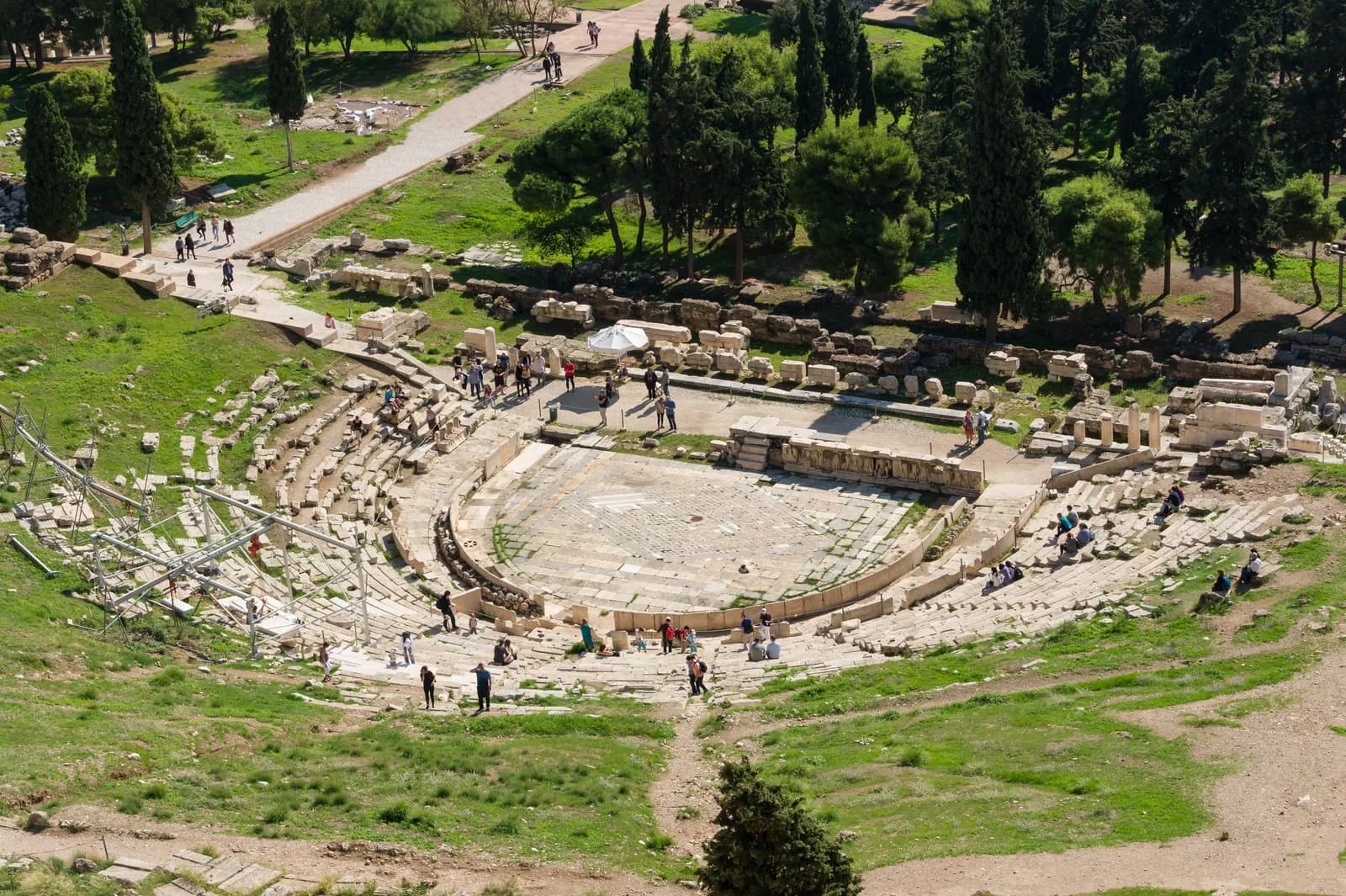
The Greek city-state in which the practice of political argument as public business — citizens facing one another in the assembly, the law-court and the theatre — reached its working extent. The case the European tradition has continued to read for two and a half millennia.
essay
An interpretive reading of what Athens specifically invented — public political argument, popular constitutional government, the institutional vocabulary of self-rule — and what the form required to work.
essay
An interpretive reading of the working contrast between Athenian and Spartan constitutional forms — what each polity actually did, what each polity actually cost, and what the European tradition has continued to argue about across two and a half thousand years.
essay
An interpretive reading of Pericles' grand strategy for the Peloponnesian War — sea power, the avoidance of land battle, restraint on expansion — and why it was abandoned after his death.
essay
An interpretive reading of the defeat of Athens in the Peloponnesian War — the abandonment of Periclean strategy, the Sicilian catastrophe, demagoguery and faction, and the Persian gold that finally gave Sparta the sea.
comparison
Two statesmen who presided over the golden ages of their cities — the first citizen of a democracy and the first citizen of a veiled monarchy — and the contrast between leading a free people and replacing their freedom with order.
philosopher
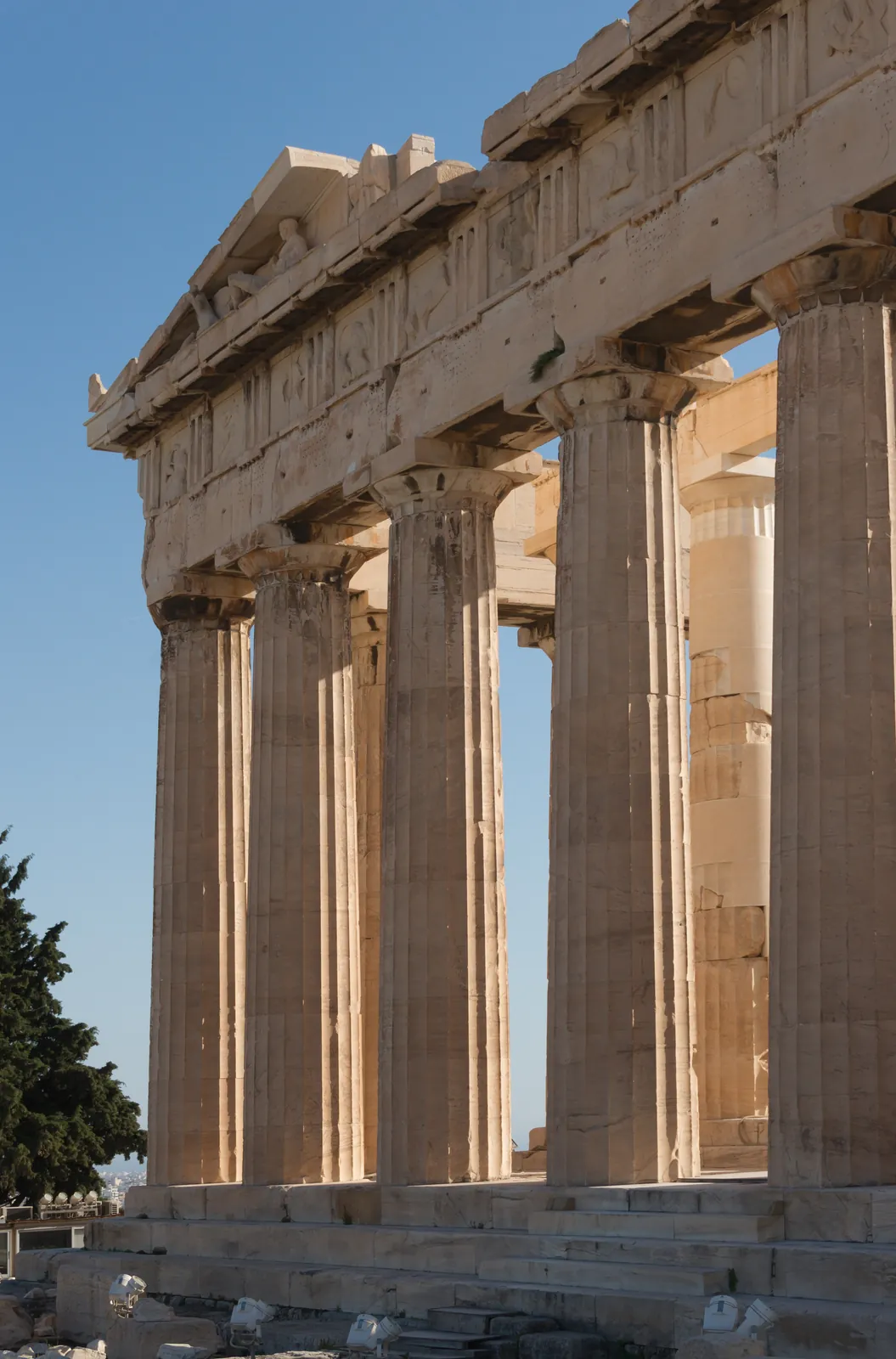
The architect named by ancient sources as responsible for the Parthenon — a figure known almost entirely through attribution rather than through any surviving account of his own.
civilization
The civilization that invented political argument as a public practice — and whose city-states, sanctuaries and texts gave the European tradition its founding vocabulary for thinking about constitution, virtue, justice, war and the well-ordered life.
civilization
The century of constitutional reform — Solon, Cleisthenes and their successors — that turned Athens from an aristocratic polis into the ancient world's most fully realised experiment in citizen self-government and the institutional invention of democracy.
philosopher
The brilliant, beautiful and treacherous Athenian whom Plutarch made the type of the ungoverned natural gift — a man of dazzling ability and boundless ambition who served, and betrayed, Athens, Sparta and Persia in turn.
philosopher
The Athenian demagogue who dominated the assembly after Pericles' death — the type of the populist war-leader, hawkish and inflammatory, whom Thucydides portrays as the embodiment of democracy degraded into the flattery of the crowd.
philosopher
The Roman who saved his republic from Hannibal by refusing to fight him — Plutarch's study of patience, steadiness and the courage to endure unpopularity, the general who made delay a strategy and gave his name to it.
book
Thucydides' account of the war between Athens and Sparta — the founding work of critical history and political realism, written by a participant as "a possession for all time" and never since superseded as an analysis of power and war.
book
Plutarch's biography of Pericles, paired with Fabius Maximus — a study of the statesman whose self-command and steadiness Plutarch held up as the model of leadership through character rather than flattery of the crowd.
theme
The question of how far history is made by outstanding individuals — the assumption beneath Plutarch's Lives, the long debate it provoked, and the platform's measured reading of character against circumstance and institution.
theme
Plutarch's reading of leadership as an expression of character rather than technique — the qualities that make a leader followed, the discipline of self-command, and the example a leader sets as his most powerful instrument.
theme
The hard view of politics, set down by Thucydides, that states act from interest, fear and the calculus of strength rather than from justice — the founding text of political realism and its permanent challenge to moral idealism.
theme
Plutarch's central concern with how private character bears on public office — whether a good man makes a good statesman, what the public arena does to virtue, and how the leader's inner life governs his use of power.
comparison
Plutarch's pairing of two leaders of steadiness and self-command — the Athenian who led a democracy without flattering it and the Roman who saved his republic by refusing battle — a study of patience as the highest political courage.
essay
An interpretive reading of the Peloponnesian War as a contest between two opposite kinds of power and polity — Spartan land discipline against Athenian naval democracy — and what the collision revealed.
essay
An interpretive reading of Plutarch as an educator of statesmen — how the Lives and the political essays of the Moralia were designed to form the judgement, self-command and virtue that public office demands.