Historical context
If the Achaemenid Empire hub reads Persia as a historical entity, this hub reads it as a machine — the administrative system that turned Cyrus's conquests into a governable state. That system was substantially the work of Darius I, who in the two decades after 522 BCE assembled the satrapies, the tribute assessments, the coinage, the road network and the chancery practice into a working whole. The platform reads the Persian imperial system as the ancient world's first complete answer to the question of governance at scale: not how to conquer a continent, but how to administer one.
Political structure
The system rested on a clear division between the person of the king and the apparatus of his rule. The King of Kings held absolute authority in principle, but in practice governed through a standing structure of offices that could function across his absences, his campaigns and even (with strain) the violent successions that recurred at the centre. This separation of the durable apparatus from the mortal ruler is precisely what distinguished an empire-as-system from an empire-as-conqueror's-achievement, and what let the Achaemenid order survive the deaths of individual kings for two centuries.
Administrative structure
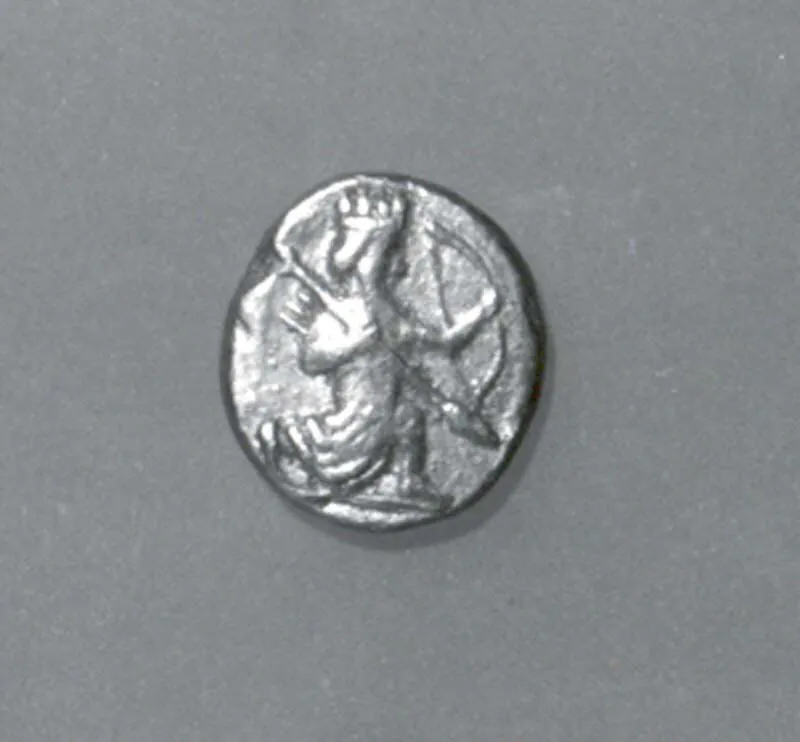
The satrapies were the load-bearing institution. Each of the roughly twenty provinces was governed by a satrap with wide civil authority, deliberately checked by a parallel military commander and royal secretary reporting independently to the centre, and audited by touring royal inspectors. Fixed tribute — assessed by each province's economic capacity rather than a uniform levy, and recorded by Herodotus — funded the state. The gold daric and silver siglos provided a common currency; standardised weights and measures regularised exchange; and a vast documentary practice (the Persepolis Fortification and Treasury tablets, in Elamite, record rations and disbursements in meticulous detail) gave the centre a paper trail. The platform reads this as the first standing imperial bureaucracy, the direct ancestor of every administrative state the region would later build.
Military organisation
Within the system, military force was a managed resource rather than a standing engine of expansion. The royal guard and the satrapal levies could be combined into large field armies, but the system's normal state was one of garrison and deterrence, with troops distributed to hold the provinces and frontiers. Crucially, the satrap's military power was institutionally separated from his civil authority where the design held — an attempt, not always successful, to prevent provincial governors from turning their commands into bids for the throne. The recurring satrapal revolts of the later period mark the points where that separation failed.
Roads and communication
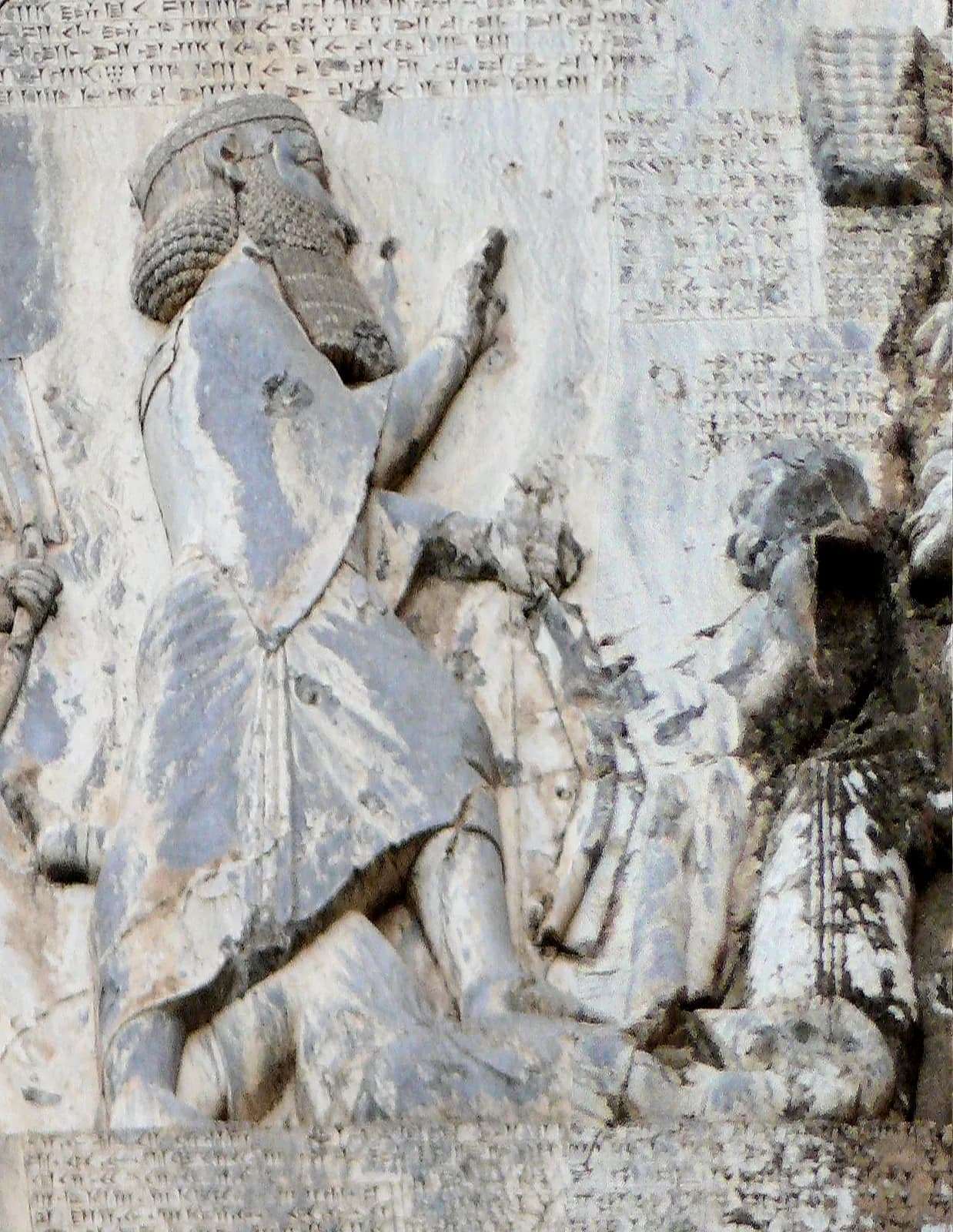
The system's circulatory infrastructure was the Royal Road and the relay post — fresh riders and horses at fixed stations carrying the king's messages across 2,700 kilometres in days. Combined with the multilingual chancery and the broadcast of royal inscriptions like Behistun across the provinces, this gave the empire a true communication network. The platform reads it under imperial communication: the system could function only because the centre could learn what the provinces were doing and make its will known to them faster than any rival or rebel could act.
Relationship to local peoples
The system governed diversity by layering rather than replacing. Atop each people's preserved law, cult, language and elite sat the satrapal administration and the tribute obligation; below that layer, local life continued in local terms. The platform reads this under empire and diversity: the administrative system was designed not to penetrate too far into local society — it extracted tribute and enforced order while leaving the texture of local life alone — and that restraint was the source of its durability.
Religion and governance
The system was held together ideologically by the king's role as upholder of right order under Ahuramazda, but administratively it was strikingly secular in operation: the tribute lists, the ration tablets, the road stations and the chancery records show a bureaucracy concerned with logistics and revenue, not theology. Religion legitimated the system from above; it did not run it. The platform reads this as part of why the apparatus was so portable — Alexander could adopt it whole precisely because its working parts were administrative rather than confessional.
Architecture and symbolism
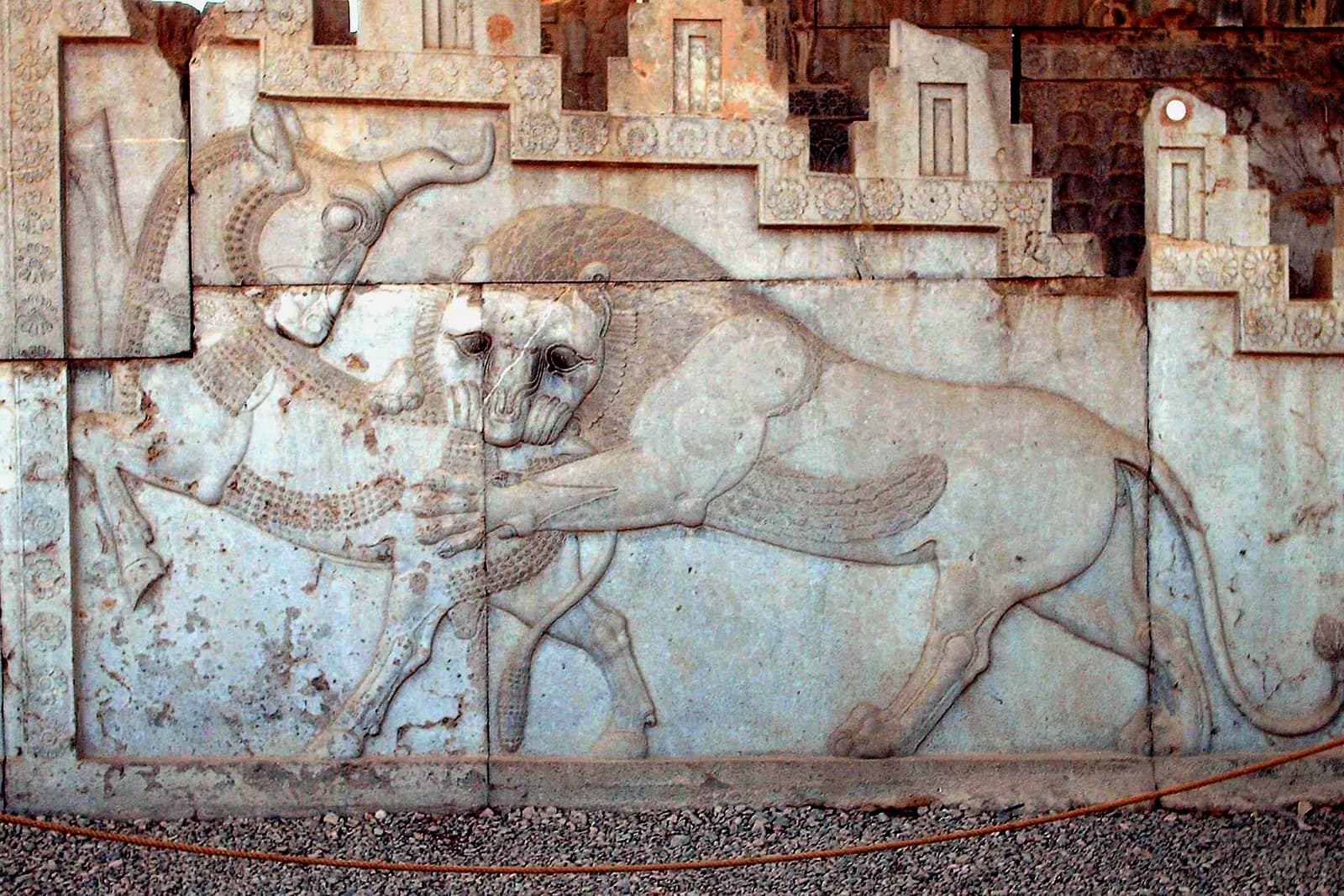
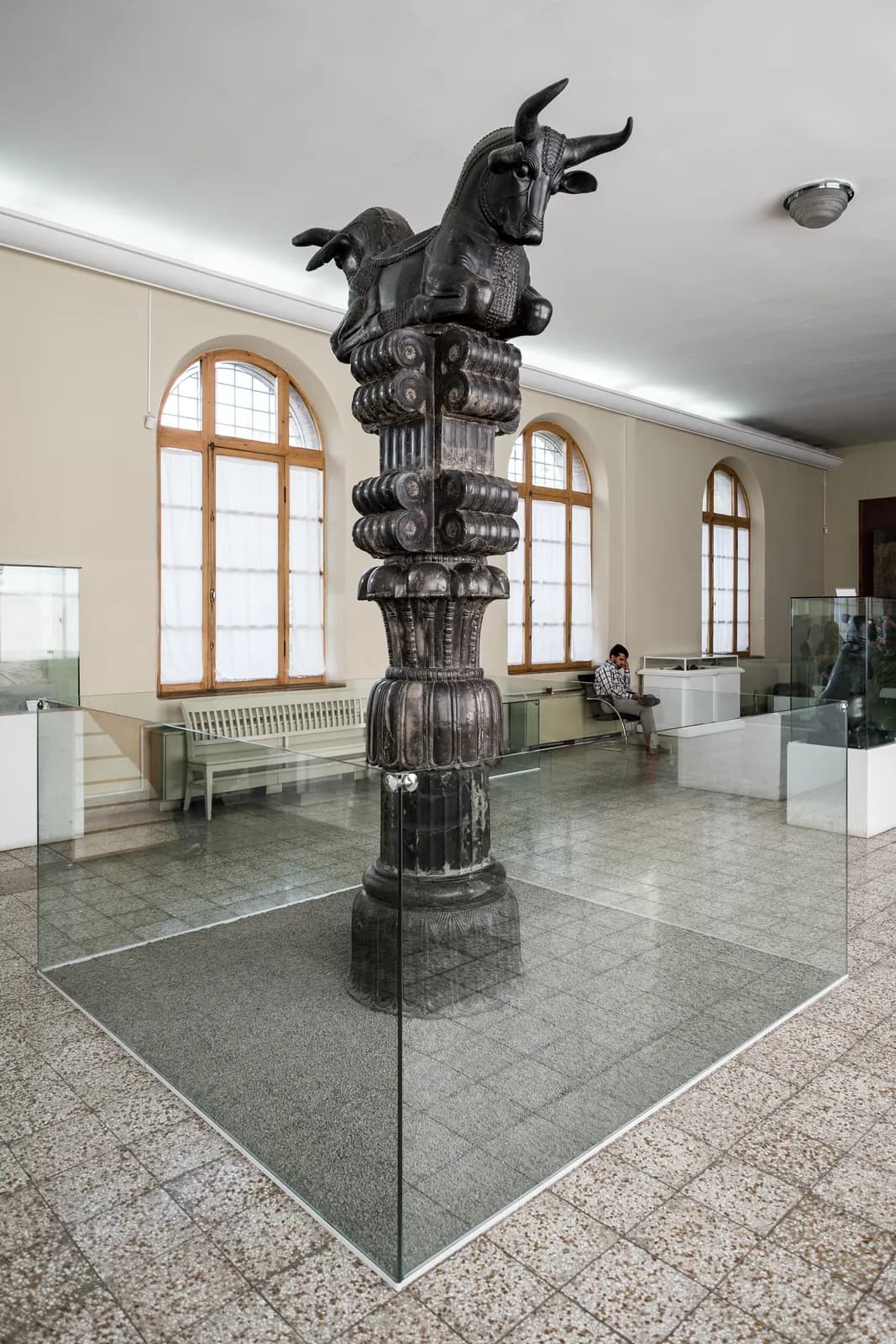
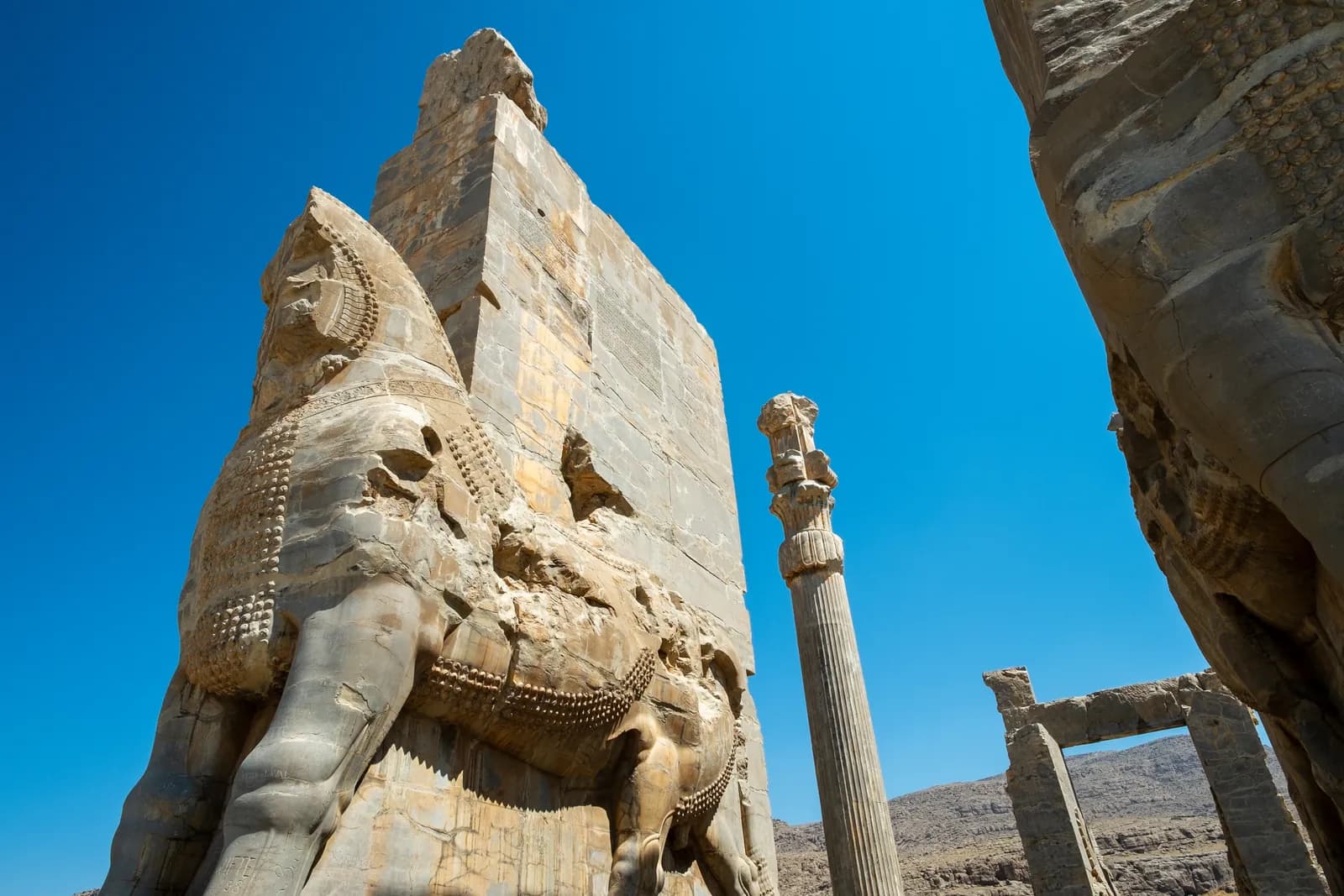
The system had a ceremonial face, and Persepolis was it. The ceremonial capital was less an administrative centre than a representation of the system — the Apadana stairway showing the tribute of the provinces flowing to the king, the Gate of All Nations receiving the empire's delegations, the bull-headed column capitals and the hundred-columned hall enacting the scale and order of the whole. The platform reads Persepolis as the system made visible: the abstract machinery of satrapies and tribute given monumental, symbolic form.
Decline and transformation
The system's weaknesses were the underside of its strengths. The same satrapal autonomy that made distance governable bred provincial revolts; the same dependence on the centre's communications meant that a contested succession at the top could paralyse the whole. But the apparatus proved more durable than the dynasty that built it: Alexander kept it, the Seleucids ran it, and the Parthians and Sasanians elaborated it. The platform reads the Persian imperial system as the component of the Achaemenid achievement that most thoroughly outlived it.
Why this civilization matters
The platform reads the Persian imperial system because it is the ancient world's first worked example of administration as the substance of empire. Conquest is dramatic and ephemeral; the satrapy, the tribute roll, the coin, the road and the courier are dull and durable, and they are what actually held a continent together. Rome would later build a comparable apparatus by different routes, and the comparison runs through the platform's whole imperial layer. The Persian system is the proof, first in time, that the question of empire is the question of administration — and that the people who master the machinery, not the ones who win the battles, are the ones who govern.