The problem
Odysseus describes his home in Book 9. The description is short, specific, and does not fit.
He says Ithaca is low-lying, and that it lies furthest out toward the dark or the west, with the other islands apart toward the dawn and the sun. He names neighbours: Dulichium, Same, wooded Zacynthus.
Modern Ithaki is mountainous rather than low-lying, and it is not the westernmost of the Ionian group — Cephalonia lies west of it. Zacynthus is identifiable with modern Zakynthos, Same plausibly with Same on Cephalonia; Dulichium has never been securely identified at all.
The poem's description of Ithaca does not straightforwardly match the island that now bears the name.
The difficulty is in the text and has been recognised since antiquity. Strabo discusses the Ionian island identifications at length in the Geography and the problems were already old in his time.
Odyssey 9.21-26; Strabo, Geography, Book 10
The possible resolutions
There are four, and they are not equally weighted.
The poet was describing somewhere else. This is the relocation hypothesis, of which the best-known modern version is Robert Bittlestone's proposal in Odysseus Unbound (2005) that the Paliki peninsula of western Cephalonia was an island in antiquity, separated by a channel since filled by seismic activity, and that it was Homer's Ithaca.
The Paliki peninsula of Cephalonia was Homer's Ithaca.
The hypothesis fits the poem's geography well and has prompted genuine geological investigation into whether a marine channel existed and could have been infilled. It has not been accepted by any consensus of classicists or geologists, and the required volume and timing of infill remain contested. It is a serious proposal with an unresolved status, not an established finding.
R. Bittlestone, Odysseus Unbound, 2005, and subsequent geological survey
The poet did not know the region well. An entirely ordinary explanation. A poet composing in Ionia, working in a tradition, may have inherited names without accurate geography. The Odyssey is similarly vague about a great deal else.
The directional words mean something other than what is assumed. The Greek adverbs translated west and east are argued over, and readings that make the description consistent have been proposed since antiquity.
The description is not meant as topography. A poem may place a home at the edge of the world, furthest toward the dark, for reasons that have nothing to do with charts.
Which of these explanations is correct.
The evidence does not currently decide. This platform reports the competing proposals and does not adopt one.
No decisive evidence
What has actually been found on Ithaki
The archaeology of the modern island is real, and it is worth separating from the identification question.
A cult site with rich early offerings existed at the Polis cave on Ithaki.
Excavation in the 1930s recovered a group of bronze tripod-cauldrons dating to roughly the ninth and eighth centuries BCE. A later inscribed fragment records a vow to Odysseus, establishing that he was venerated at the site in the historical period.
Excavations at the Polis cave, Ithaki
The tripods have attracted attention because Odysseus receives tripods as guest-gifts from the Phaeacians, and the counts have sometimes been matched up. That correspondence is suggestive and is not proof of anything: tripods were a standard high-value dedication across the Greek world, and a cult of a hero at a place named in an epic is evidence about the epic's reception, not about the epic's accuracy.
People in historical Greece believed modern Ithaki was Odysseus's Ithaca.
The cult evidence and the continuity of the name support this. What ancient Greeks believed about the location is a well-evidenced historical fact, and is independent of whether the belief was correct.
Polis cave cult material; ancient literary references
Mycenaean-period settlement existed on Ithaki.
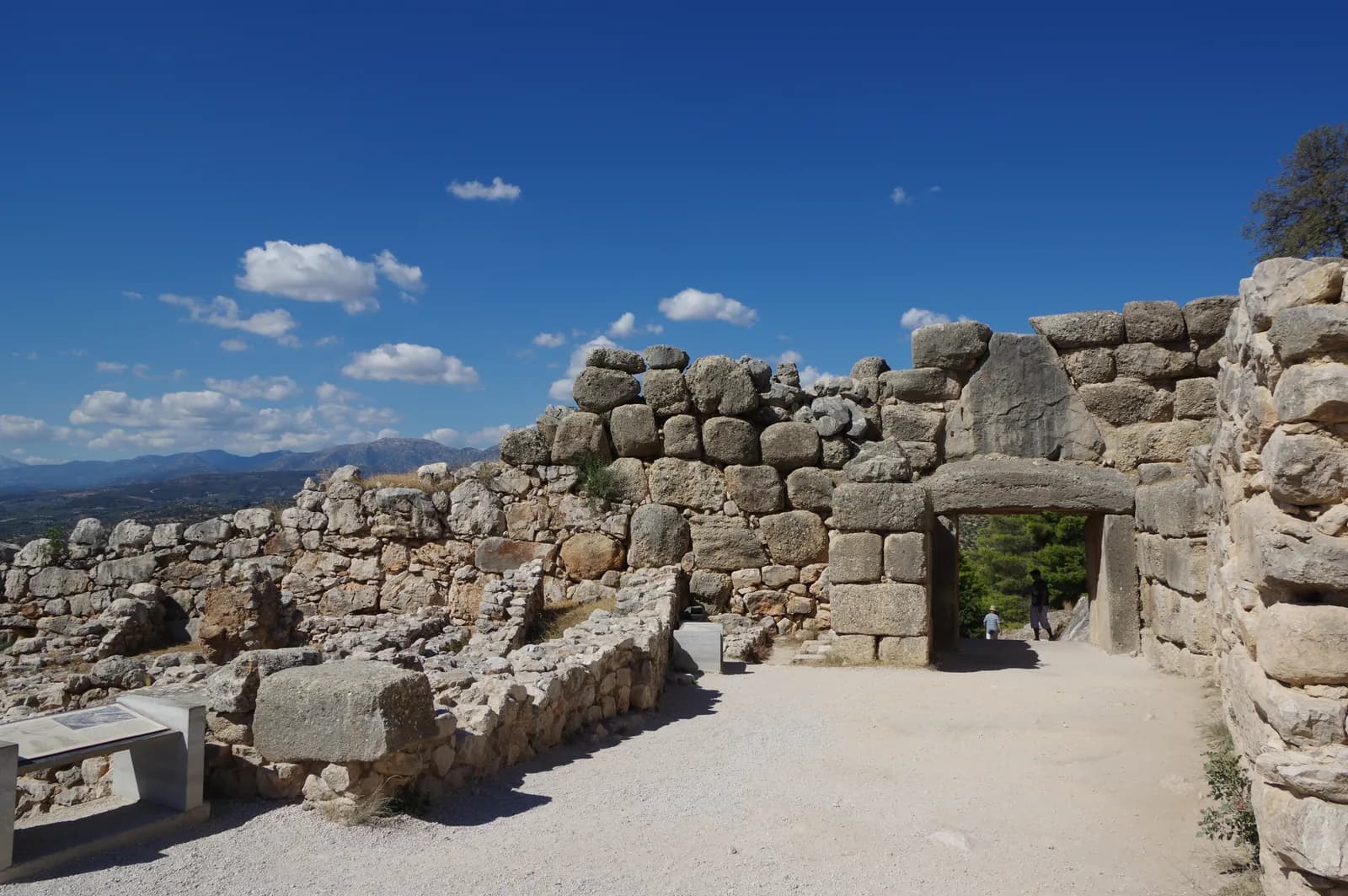
Sites on the north of the island, including the location traditionally called the School of Homer, have produced Late Bronze Age material. This establishes occupation. It attaches to no individual and to no palace of the kind the poem describes.
Excavation reports, northern Ithaki
The honest summary
The island called Ithaca today was called Ithaca in antiquity, was occupied in the Bronze Age, and had a hero cult of Odysseus in the historical period. Whether it is the island the poem describes is undecided, because the poem's own description does not fit it and the best alternative proposal is unproven.
That is a genuinely interesting result, and it is not improved by tidying.
How to read the evidence labels
Evidence levels used on this page
- Evidence level: Documented
- Supported by a named primary text or by excavated material evidence.
- Evidence level: Probable
- Supported by strong inference that most specialists accept.
- Evidence level: Disputed
- Substantial specialist disagreement exists; competing readings are stated.
- Evidence level: Literary
- Belongs to poetic or mythological construction rather than to history.
- Evidence level: Mythological
- Belongs to shared religious or mythic tradition rather than to any single text.
- Evidence level: Unknown
- The available evidence is insufficient to decide.
These labels describe the status of the evidence, not our confidence in a conclusion. A claim marked Literary is not a claim we doubt; it is a claim about what kind of thing a poem is.