Xenophon
The Works of Xenophon
A guide to the works of Xenophon — the historical Anabasis and Hellenica, the Socratic Memorabilia, Oeconomicus, Symposium and Apology, the political Cyropaedia, Agesilaus and Constitution of the Lacedaemonians, and the technical Hipparchicus.
The Xenophontic corpus is unusually broad. No other ancient author the platform treats wrote across so many genres — history, biography, political theory, Socratic dialogue, and the technical treatise — and the breadth is the point: it is the body of work of a man who had lived as a soldier, a landowner, a student of philosophy and a witness to two empires. The platform reads the works not as a miscellany but as a single project, unified by his conviction that good order, at every scale, flows from the character of the one who governs. The standard Greek text is E. C. Marchant's Oxford Classical Texts; editions and translations are listed on the Sources page.
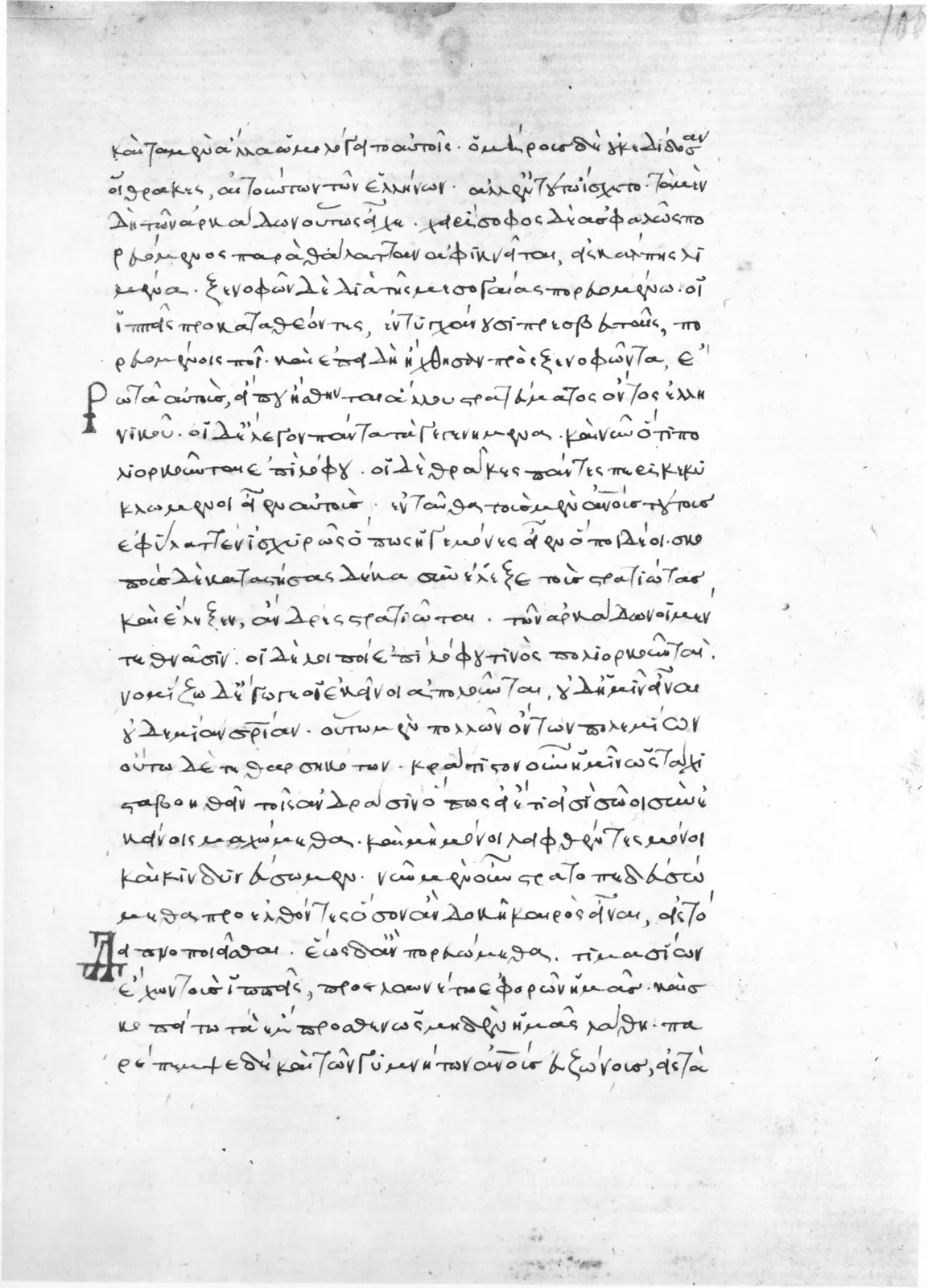
A Byzantine Greek manuscript of the Anabasis — the kind of copying on which the survival of the works depended.
Historical works
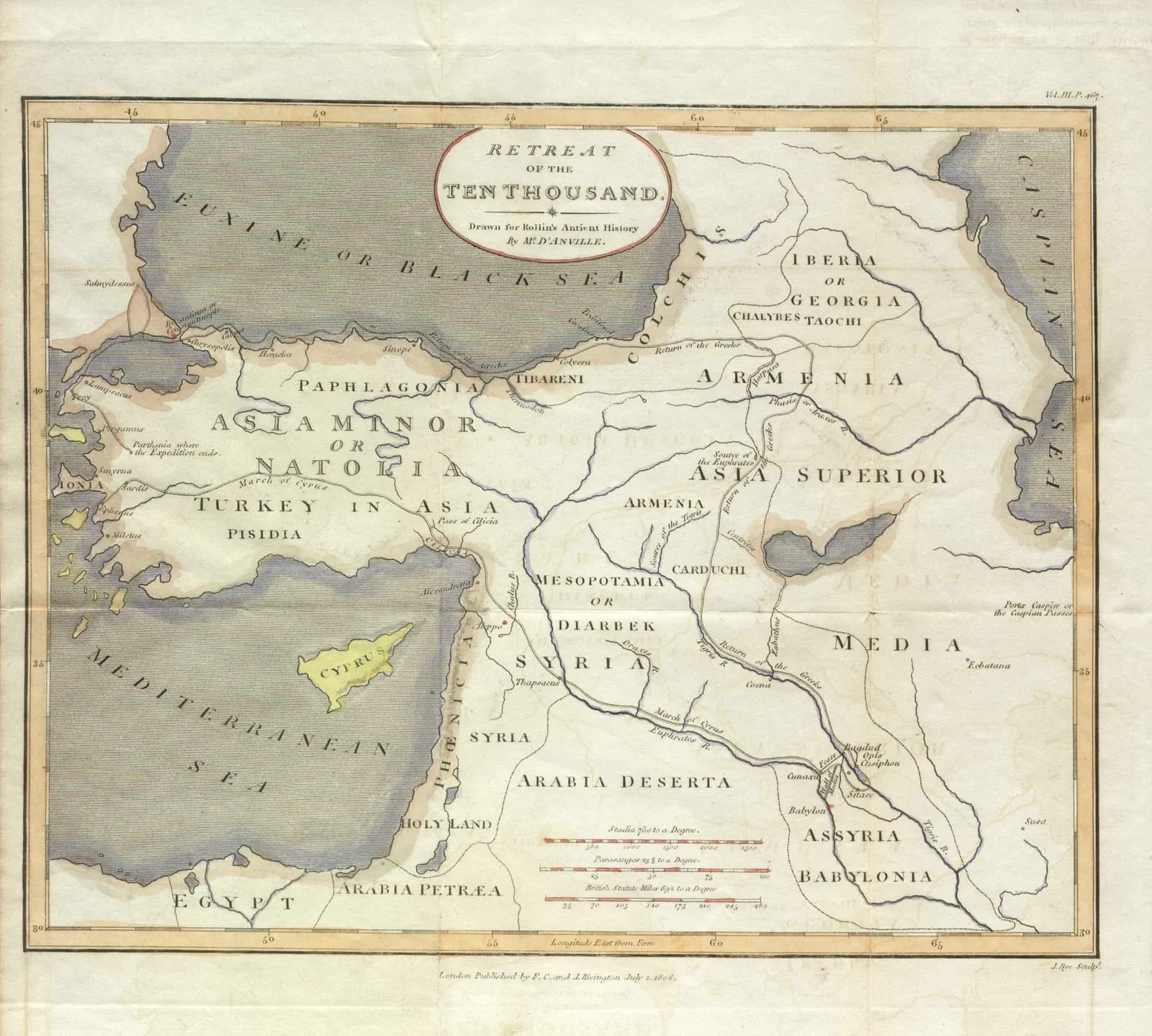
The campaigns and affairs of the Greek world, written by a participant.
Socratic works
The second great portrait of Socrates — practical, useful, concerned with the conduct of life.
- Memorabilia — The fullest of the Socratic works: a portrait and defence of Socrates the practical counsellor.
- Oeconomicus — On the management of a household and estate — the foundational text of household economy.
- Symposium — A dinner party at which Socrates and his friends declare what they are proudest of.
- Apology of Socrates — A short defence of Socrates' bearing at his trial — death chosen over the decline of old age.
Political and pedagogical works
The formation of rulers and the ordering of states.
- Cyropaedia — The education of Cyrus — the first sustained ancient study of how a ruler is formed.
- Agesilaus — An encomium of the Spartan king Xenophon served — idealised, disciplined kingship in a real man.
- Constitution of the Lacedaemonians — The fullest contemporary account of the Spartan order attributed to Lycurgus.
Technical works
Command and horsemanship, where the technical and the ethical meet.
- Hipparchicus — The Cavalry Commander — a manual for the Athenian hipparch that doubles as a study of leadership.
How the platform reads them
The platform reads each work for its purpose, context, argument, influence and modern significance rather than as a plot summary, and with the citation discipline the corpus requires: Xenophon is a witness whose loyalties must be weighed — partial toward the Sparta and the kingship he admired — and his idealised portraits (the Cyrus of the Cyropaedia, the Agesilaus of the encomium) are read as philosophical constructions, not documentary records. Read together, the works make the case the platform argues in why Xenophon still matters: that this soldier-philosopher of character and command belongs in the first rank of the classical inheritance.