theme
The classical political form in which authority is shared, magistracies rotate, and the people are taken to be the ground of legitimacy — and the long inquiry into why it tends to be unstable.
theme
The disposition that makes a citizen willing to subordinate private advantage to the common life — and that the classical republican tradition treats as the precondition for self-government.
theme
The classical and Stoic concept of officium — what a person owes their household, their friends, their republic — and the long ethical tradition that descends from it.
theme
The classical and historical inquiry into nomos — the customs, statutes and institutional forms by which a polity holds its citizens to a common life.
philosopher
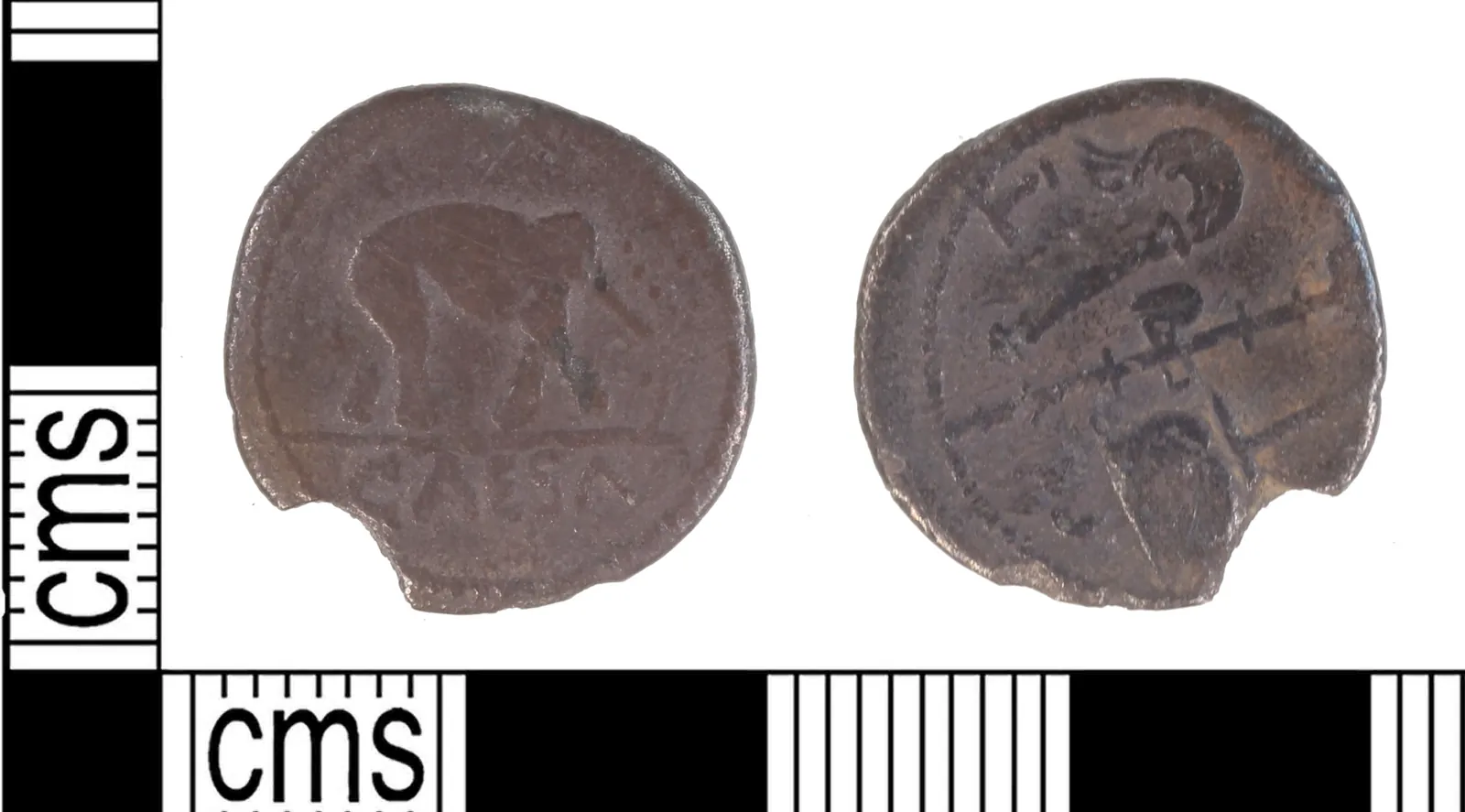
The Roman general, statesman and writer whose decade-long Gallic command, civil war against Pompey, and brief dictatorship effectively ended the Roman Republic — and made him the single most-read figure of European political history.
philosopher
The Roman senator and Stoic whose refusal to compromise with the political settlement Caesar imposed made him the standing emblem of Republican civic virtue for two thousand years of readers.
philosopher
Pompeius Magnus — the Roman general whose vast military reputation gave him a decade of unprecedented Eastern command and whose final political alignment broke the late Republic into open civil war.
book
Cicero's three-book treatise on duty, written in the autumn of 44 BCE as he stood publicly against Antony — the most complete ancient statement of what a senator, magistrate or citizen owes to the Republic, and the single classical text that did the most work in the European moral tradition for the two millennia after.
book
Cicero's six-book dialogue on the mixed constitution and the dignity of public service, composed 54–51 BCE — partly lost, partly preserved in the closing *Somnium Scipionis*, partly recovered by Angelo Mai from a Vatican palimpsest in 1819.
essay
An interpretive reading of the Roman conception of civic virtue — Cicero's De Officiis as its most complete extant statement, Cato as its embodiment, and the long European inheritance that kept the moral vocabulary long after the polity it was written for had ended.
essay
An interpretive reading of Cicero's defence of civic order — the philosophical works of the 50s and the 40s BCE — and of why the European tradition kept reading them after the polity they were written for was over.
civilization
The five centuries in which Rome governed itself through a constitution of no single author — magistracies, senate and assemblies in tension — and built the institutional vocabulary of self-government that Europe would read long after the Republic that produced it was gone.
civilization
The civilization whose republic and empire together constitute the longest sustained ancient case study of constitutional life, military command, and the loss of self-government — and whose institutional vocabulary the European tradition kept reading long after the polity was gone.
philosopher
The greatest orator of Athens, who spent his gifts in a long, losing defence of Greek liberty against the rising power of Macedon — Plutarch's study of eloquence in the service of a failing cause, paired with Cicero.
philosopher
The Greek statesman-historian taken to Rome as a hostage after Pydna who, from inside the Scipionic circle, produced the analysis of Roman constitutional balance that shaped European political thought from Cicero through Madison.
philosopher
The Roman senator-turned-historian who, writing in retirement under the Second Triumvirate, produced the most influential ancient diagnosis of the late Republic's moral collapse — and gave the European tradition its standing vocabulary for talking about civic corruption.
book
Polybius's forty-book history of Rome's rise to Mediterranean dominance in the third and second centuries BCE — surviving in part, with Book VI standing as the single most influential ancient analysis of constitutional balance and the foundation document of the European tradition of mixed-constitutional thought.
book
Plutarch's biography of the Roman orator and statesman, paired with Demosthenes — a sympathetic but unsparing study of eloquence and vacillation in the Republic's last generation, and of the vanity that shadowed real greatness.
book
Plutarch's Parallel Lives — paired Greek and Roman biographies, organised for comparison and for the study of character through what people did. The principal source through which later Europe learned to read the late Roman Republic.
book
Sallust's short historical monograph on the conspiracy of 63 BCE — written a generation later from political retirement, framed as a study not of one criminal act but of the moral conditions that made the act possible, and the first surviving Roman history written as a literary genre.
theme
The working ancient idea of *politēs* — the person who counts as a participant in the political life of the city, with the specific rights and duties the constitutional form makes available — and the long question of how the working content of citizenship survives, contracts, or expands across political transformation.
theme
The classical and Roman idea of a polity held together not by force or by sacred authority but by the working agreement among its citizens that the institutions, laws and customs they share are worth being constrained by.
theme
The classical inquiry into the deformation of institutions and characters under wealth, faction and unchecked power — the inverse of civic virtue.
theme
The relation between inherited, unwritten custom and deliberate, written law — the mos maiorum, the Confucian li, and the long argument over whether good order rests on statute or on a way of life.
theme
The Roman conviction that a polity's character is shaped by the way it remembers itself — that history is a moral practice, not an antiquarian one, and that the *exempla* of the founders' generation are the substance out of which civic virtue is formed.
theme
The classical and Roman inquiry into the social economy of standing and recognition — Greek timē, Roman dignitas — and the role it plays in shaping political action.
theme
How Rome turned the customary law of a city-state into a portable, professional legal system for a continental empire — the work of the jurists, the praetor's edict and the emperor's rulings, and the single most enduring institutional legacy Rome left to Europe.
theme
The classical and early-modern argument that the most stable regime is one whose institutions combine elements of monarchy, aristocracy and democracy so that each checks the others — first analysed in Polybius VI, developed by Cicero, and inherited by the European republican tradition.
theme
The working ancient practice of treating political life as something to be argued about in public, between citizens who can refuse the answer — the specific Greek invention the European tradition has not stopped using as its working substrate.
theme
The expanding definition of who counted as a Roman — from the closed citizen body of the early Republic, through the enfranchisement of Italy and the provinces, to Caracalla's grant of citizenship to almost every free inhabitant of the empire in 212 CE.
theme
The principle that a polity is governed by settled, general, publicly known law rather than by the unbound will of a ruler — its long classical genealogy from Solon and Aristotle to the Roman jurists.
comparison
Plutarch's pairing of the two supreme orator-statesmen of Greece and Rome — each the voice of a free constitution in its last generation, each destroyed as that constitution fell — a study of eloquence and its limits in public life.
essay
An interpretive reading of Caesar's career as the convergence of forces the Republic had not, by the 50s BCE, managed to contain — and of the long argument over whether his crossing of the Rubicon caused the collapse or merely revealed it.
essay
An interpretive reading of Polybius VI — the analysis of the cycle of regimes and the Roman mixed constitution — and of why the framework it set out shaped Cicero, Machiavelli, Montesquieu and the American founders.
essay
An interpretive reading of Sallust's *Catilina* and *Iugurthinum* — the proem on Roman decline, the twin speeches of Caesar and Cato, the portrait of Marius, and the long European reception of the diagnosis.
essay
An interpretive reading of how constitutional orders come apart, from the factional collapse Aristotle anatomised to the slow death of the Roman Republic and the swift fall of the Qin, and what the failures share.
essay
An interpretive essay on the specific working content of the Greek invention of political argument as public practice, and on what the European tradition's continuing use of the inheritance has demanded.
essay
An interpretive reading of the Roman historiographical tradition as a form of civic education — the *exempla*, the *mos maiorum*, and the European tradition that received the practice and continued it.
essay
An interpretive reading of why the Roman political inheritance — the Republic, the imperial transformation, the long literature of statesmanship — became the central case the European political tradition argued with for two thousand years.
essay
An interpretive reading of the long collapse of the Roman Republic — the structural conditions in place by Marius and Sulla, the careers that exploited them, and the ancient and modern arguments over which factor was load-bearing.