Reunification and renewal
The Middle Kingdom is the age in which Egypt recovered from collapse. The platform reads it as the proof of Egypt's most distinctive quality — its power of renewal. After the division and local rule of the First Intermediate Period, the rulers of Thebes, above all Mentuhotep II, reunified the country by force and restored the centralized pharaonic state; their successors of the Twelfth Dynasty, the great Senusrets and Amenemhats, gave it a firmer and more durable footing. The platform reads the Middle Kingdom as the demonstration that the Egyptian order could die and be reborn — that the forms fixed in the Old Kingdom were resilient enough to survive even the collapse of the state that created them.
Political structure and administration
The platform reads the Middle Kingdom monarchy as a chastened and more deliberate version of the Old Kingdom's. Having seen the throne fall to the over-mighty provincial nobles, the Twelfth-Dynasty kings worked to curb the nomarchs, strengthen the central administration, and rebuild royal authority on a more sustainable basis. The platform reads the reign of Senusret III as the high point of this effort — a reform of provincial government that restored real central control. The Middle Kingdom state was, in the platform's reading, more self-conscious about the administrative foundations of order than its predecessor, precisely because it had seen what their failure cost.
The classical age of Egyptian culture
The platform reads the Middle Kingdom's deepest legacy as cultural. Its form of the Egyptian language, "Middle Egyptian," became the classical idiom that later Egyptians studied and imitated for fifteen hundred years; its literature — the Tale of Sinuhe, the wisdom texts, the meditations on a world that had fallen apart and been restored — was revered by later ages as the canon of Egyptian writing. The platform reads this under continuity and memory: the Middle Kingdom became, for Egypt itself, a classical past to be remembered and emulated, the age whose language and literature defined what cultivated Egyptian meant ever after.
Architecture and the king as shepherd
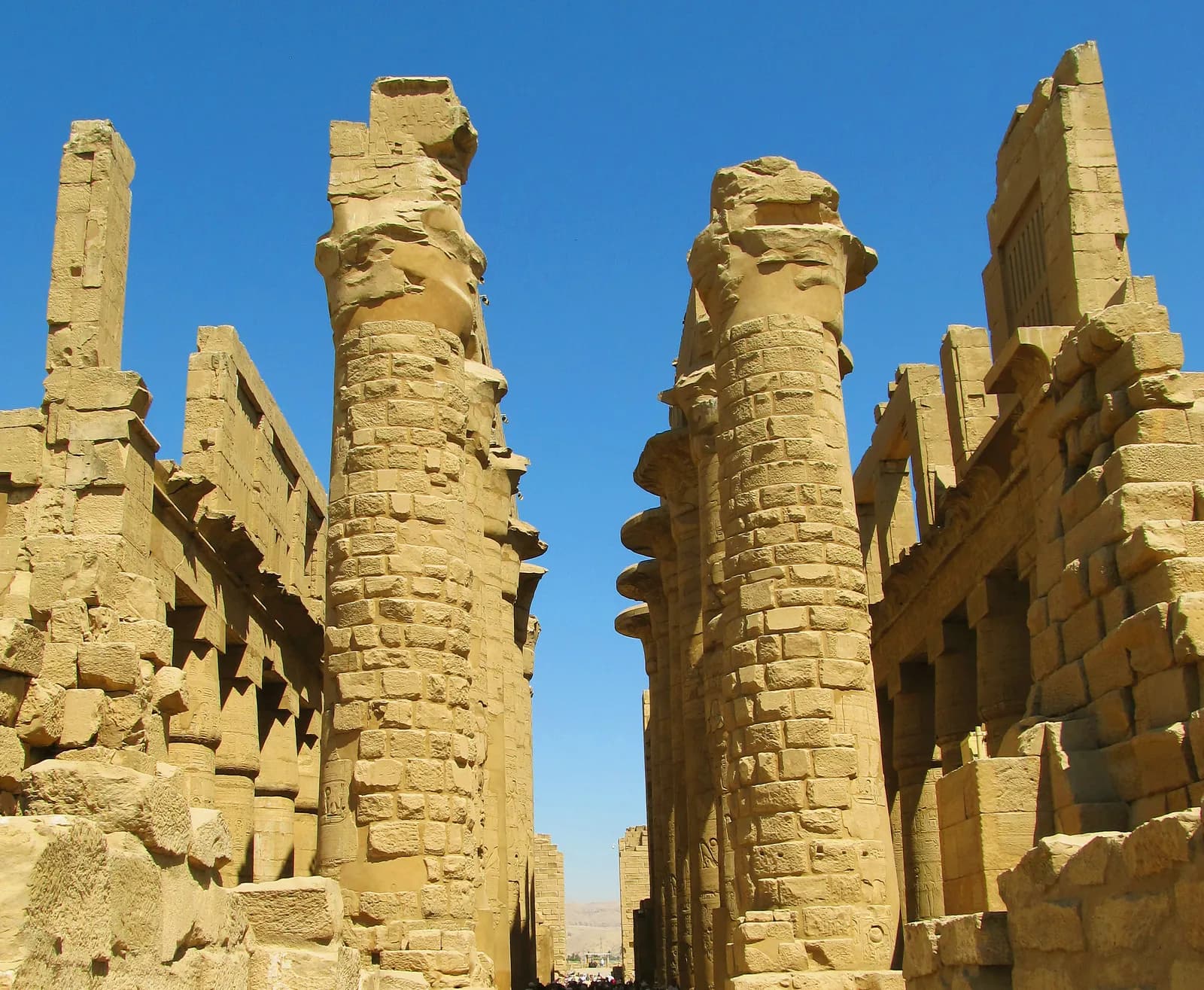
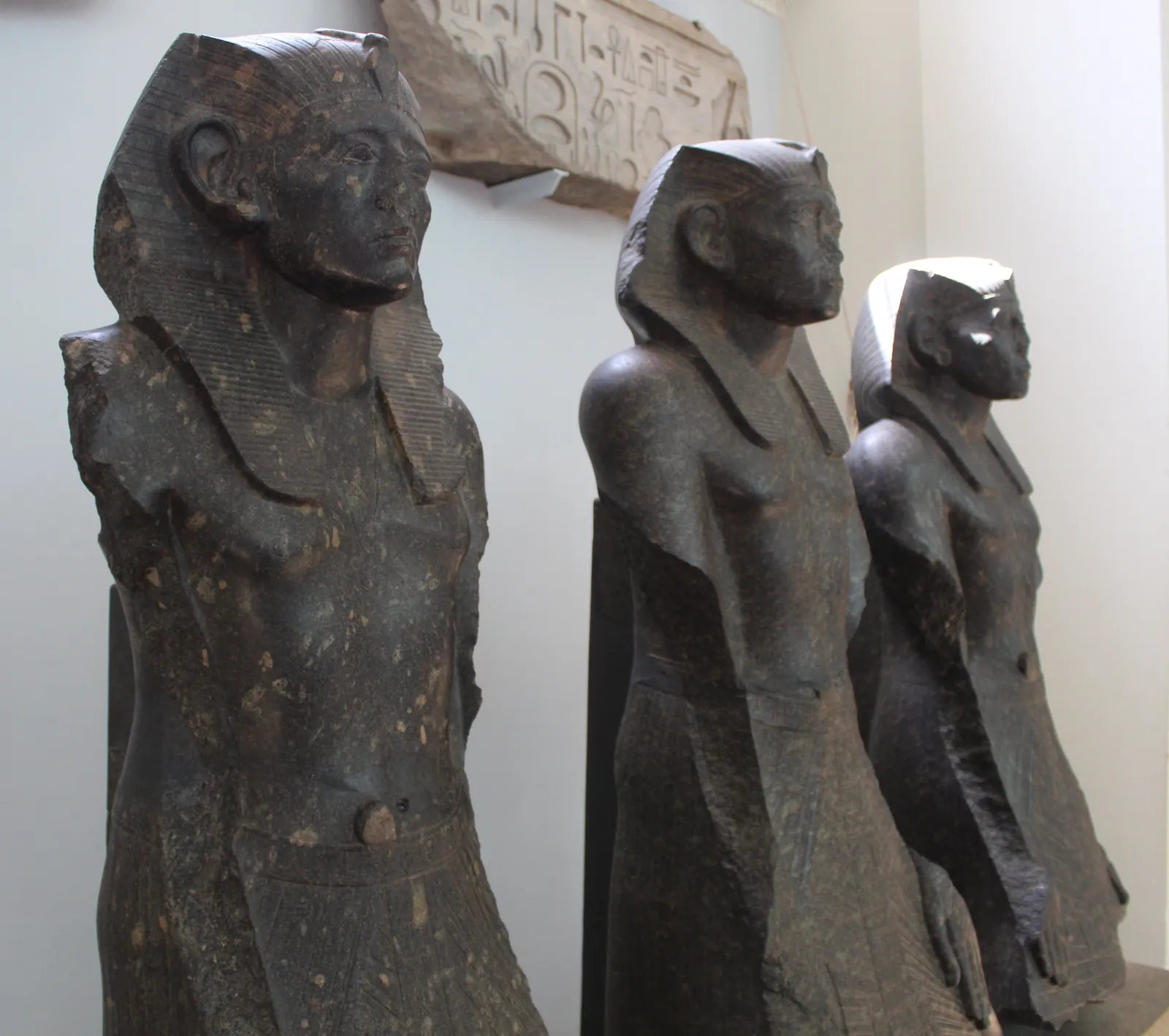
The platform reads the Middle Kingdom's monuments and royal image as marking a subtle shift in the conception of kingship. The kings built pyramids again, though of more modest scale and construction than the Old Kingdom giants, and they began the great temple of Amun at Karnak that the New Kingdom would raise to grandeur. More striking is the change in the royal portrait: the careworn, brooding faces of the later Twelfth-Dynasty kings, above all Senusret III, express a new ideal — the king not as a serene god but as a shepherd burdened by the care of his people. The platform reads this as a deepening of pharaonic legitimacy: kingship as responsibility, weighed in the king's own face.
Decline
The platform reads the Middle Kingdom's decline as a slower echo of the Old Kingdom's. The strong Twelfth Dynasty gave way to the weak and short-lived kings of the Thirteenth, central authority eroded, and the Delta fell under the control of the Hyksos — Asiatic rulers who came to dominate northern Egypt in the Second Intermediate Period. The platform reads this second collapse and foreign domination as the prelude to the third and greatest restoration: the New Kingdom, born of the Theban war to expel the Hyksos.
Why the platform reads the Middle Kingdom
The platform reads the Middle Kingdom as the age that proved Egyptian order could be reborn, and as the civilization's own classical past — the source of its language, its literature, and its deepening conception of the king as the burdened guardian of his people. It is the central panel of the platform's Egypt-through-the-ages reading and a key case in Egyptian memory across millennia.