Egypt at its zenith
The New Kingdom is Egypt at the height of its power, wealth and ambition — the imperial age, and the period that produced most of the names the world associates with ancient Egypt. The platform reads it as the third and greatest of Egypt's flowerings: born of the Theban war to expel the foreign Hyksos, it turned a recovered Egypt outward into an empire stretching from the Euphrates to deep Nubia, made Thebes and its god Amun the centre of a fabulously rich temple-state, and raised monuments — Karnak, Luxor, Abu Simbel, the Valley of the Kings — that remain the supreme images of pharaonic grandeur.
Political and military structure
The platform reads the New Kingdom as a warrior-monarchy in a way the earlier ages were not. The expulsion of the Hyksos had been a military achievement, and the pharaohs who followed were warrior-kings who led armies in person: Thutmose III, the maker of the empire, campaigned almost annually and built Egyptian power to its greatest extent. The empire was held through conquest and integration — a network of vassal princes, garrisons and tribute rather than direct annexation — and the platform reads the New Kingdom state under empire-building: a sacred monarchy that had become, for the first time, the dominant imperial power of the Near East.
Religion, the state, and Akhenaten
The platform reads religion as the central political fact of the New Kingdom. The wealth of empire flowed to the temples of Amun at Thebes, whose priesthood grew into a power rivalling the throne — the tension that the platform reads behind the most dramatic episode of the age, the religious revolution of Akhenaten, who tried to break the old cults in favour of the sun-disk Aten and failed against the weight of Egyptian continuity. The platform reads this under state and religion: in the New Kingdom the relation of the pharaoh to the gods, and to their priests, became the deepest question of Egyptian politics.
Architecture and the imperial monument
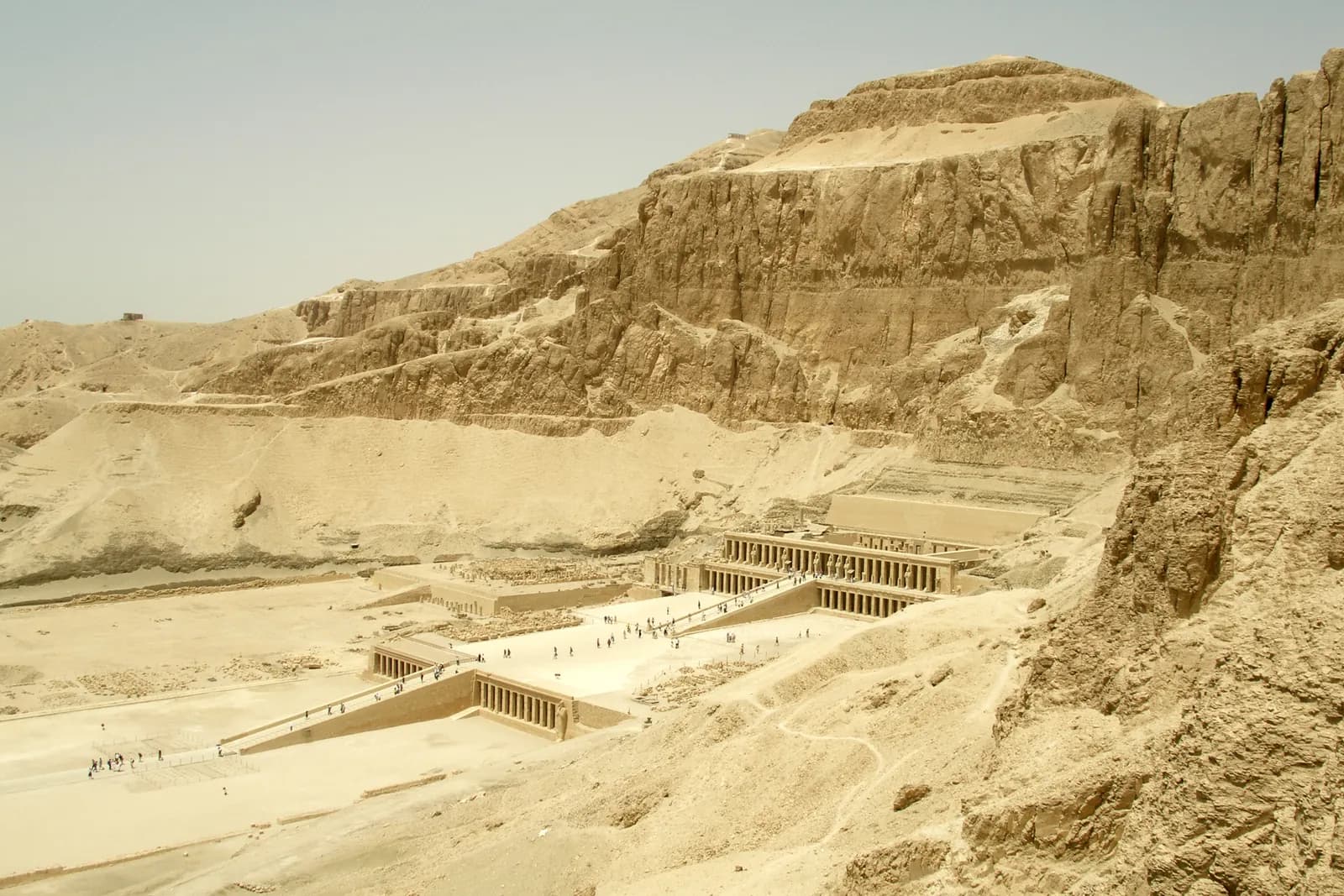
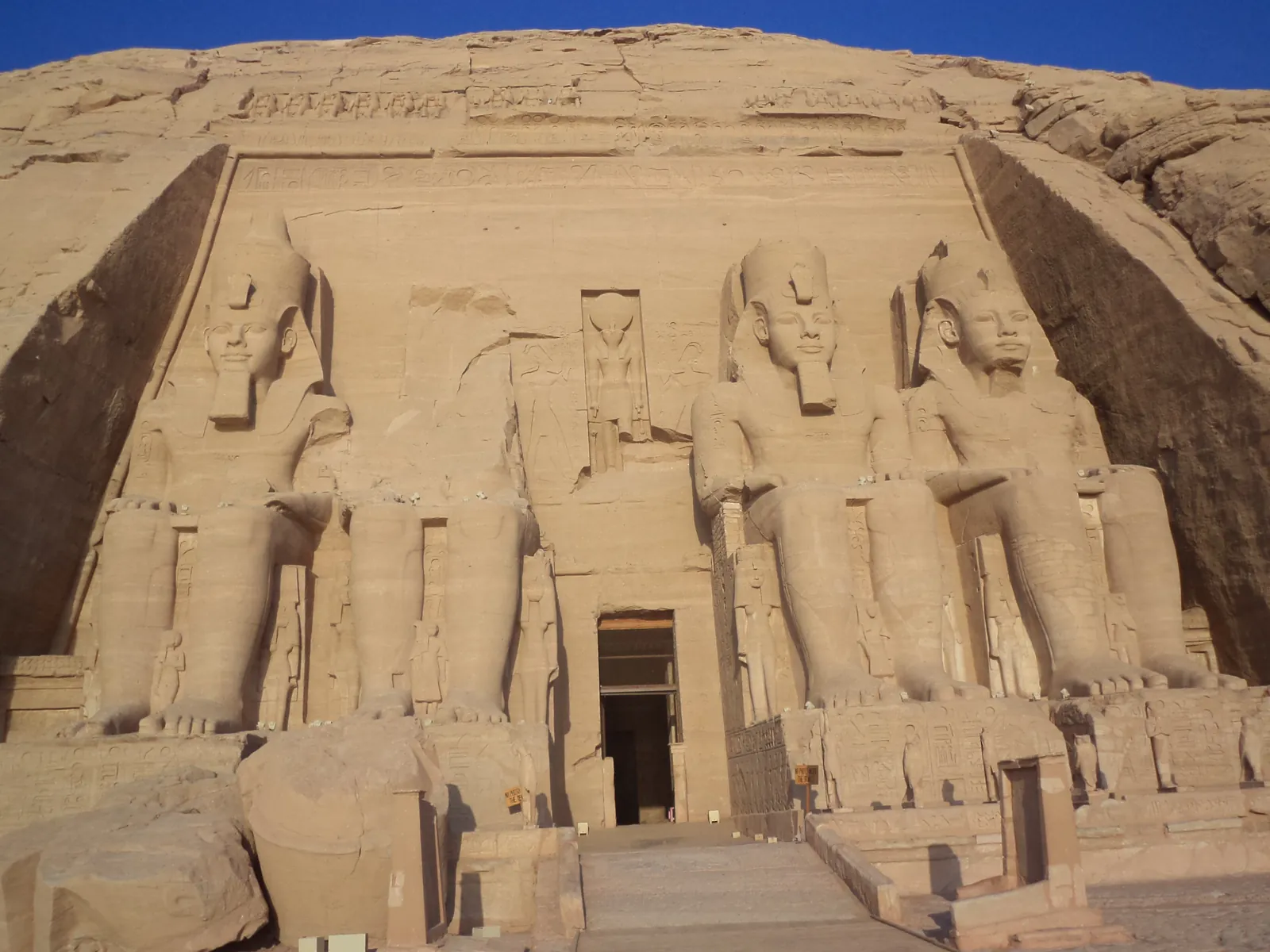
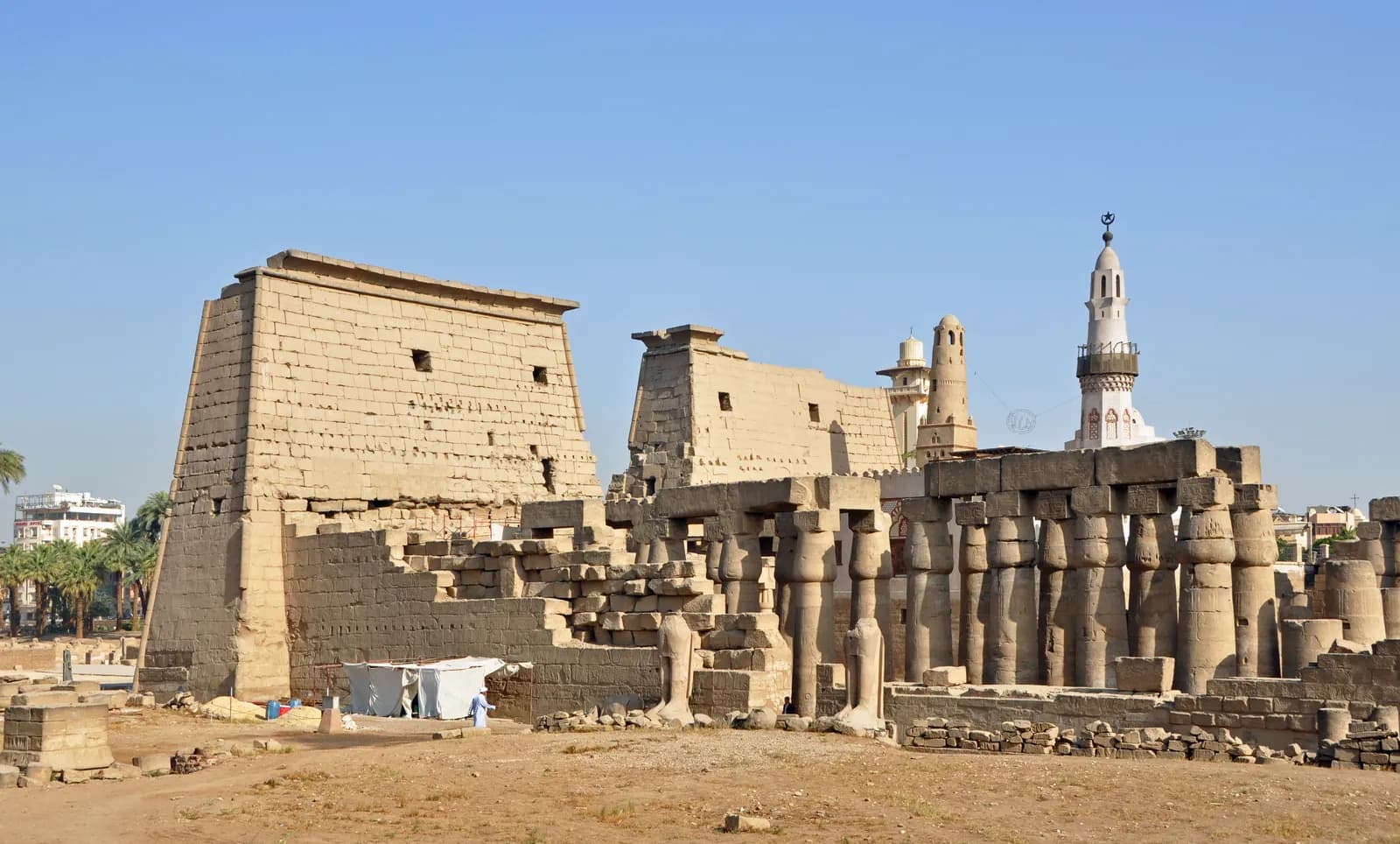
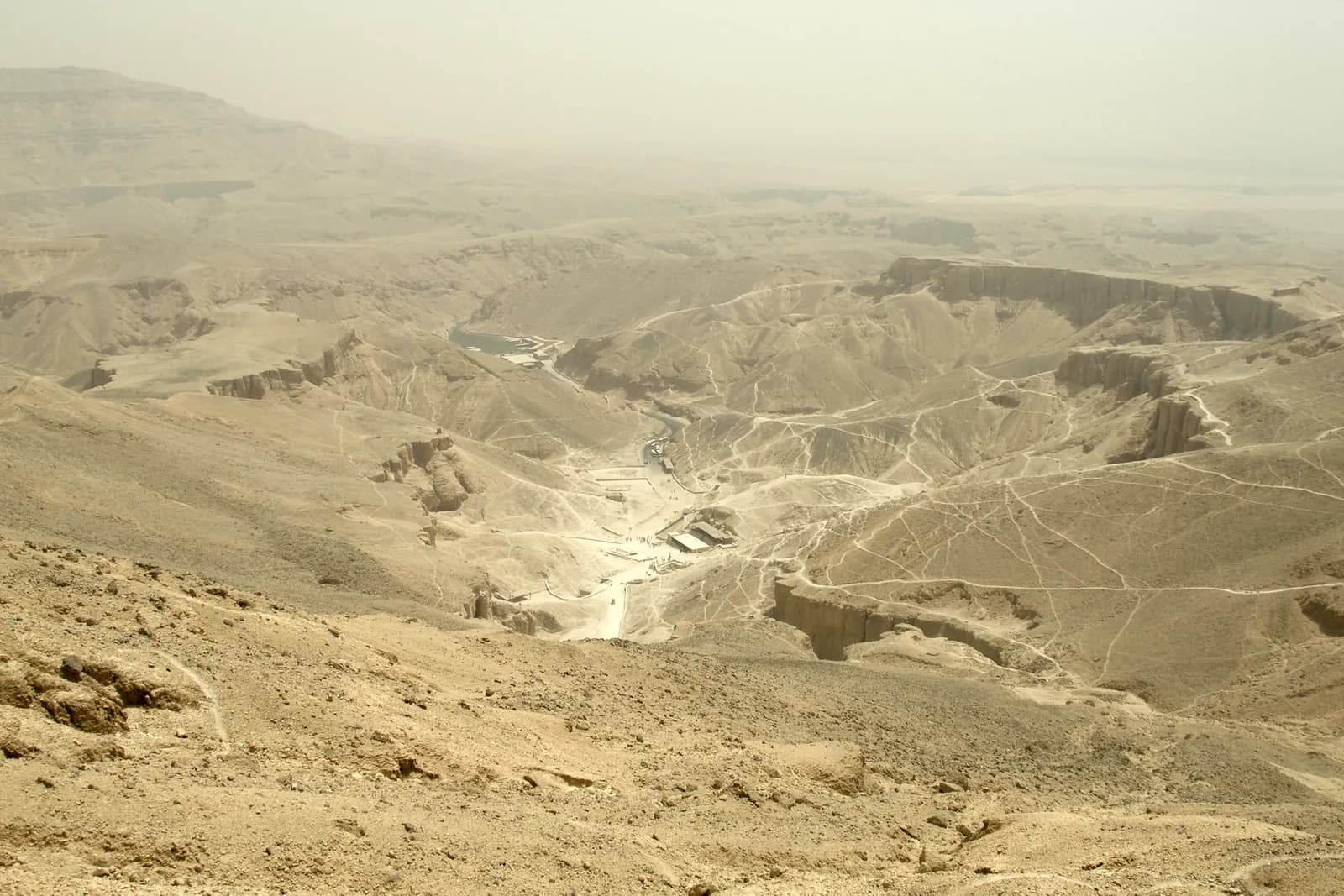
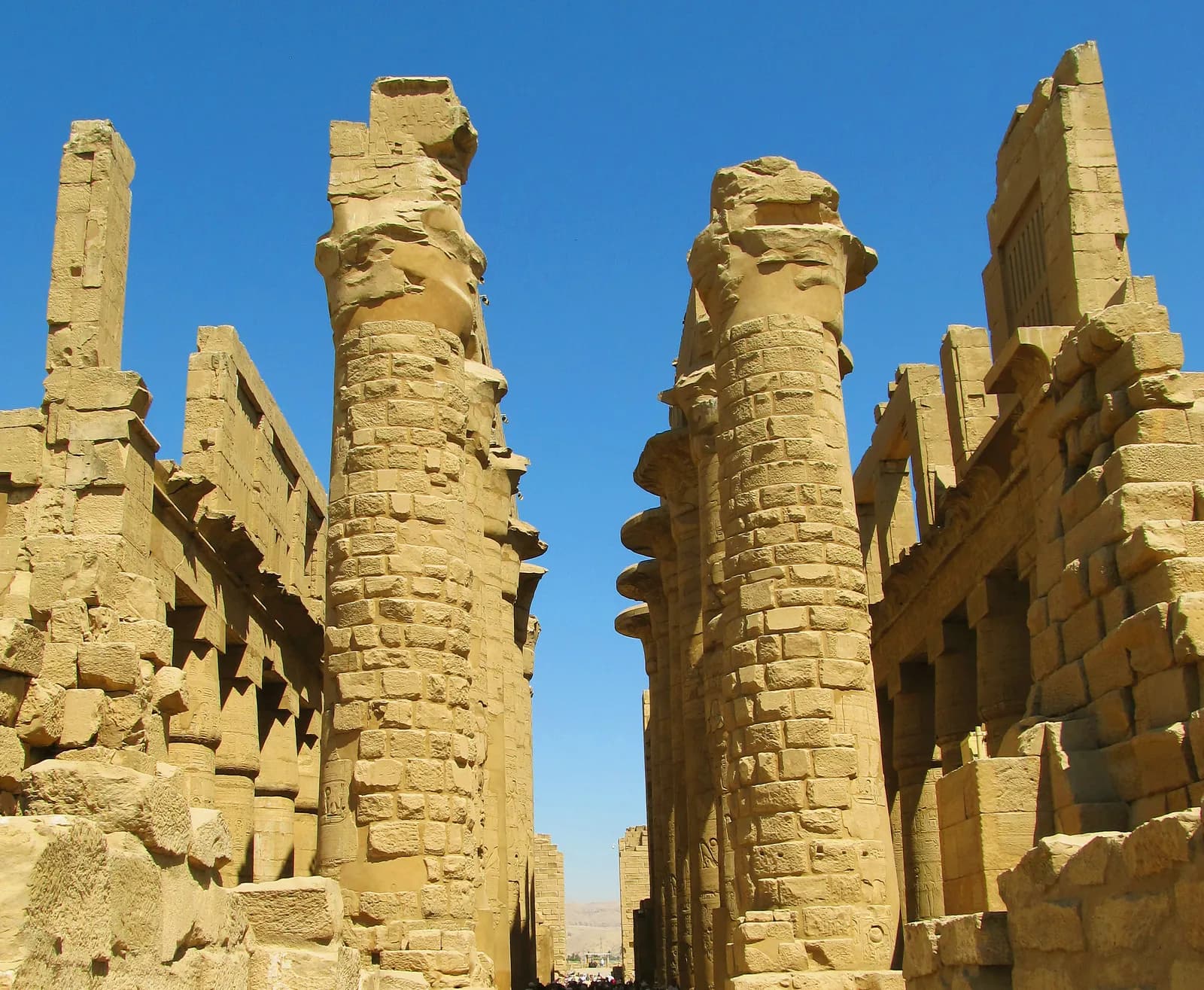
The platform reads New Kingdom architecture as monumentality at its imperial peak. The temple of Amun at Karnak grew, dynasty by dynasty, into the largest religious building of the ancient world, its great hypostyle hall a forest of colossal columns; Luxor temple, the mortuary temple of Hatshepsut at Deir el-Bahari, the rock temples of Ramesses at Abu Simbel, and the royal tombs cut into the Valley of the Kings made the Theban region the greatest concentration of monumental architecture on earth. The platform reads these as legitimacy, empire and eternity rendered in stone.
Decline
The platform reads the New Kingdom's decline as the slow exhaustion of the imperial age. After Ramesses II the empire contracted under external pressure — the Sea Peoples, the loss of the Asiatic possessions — while at home the wealth and power of the Amun priesthood hollowed out the monarchy, until the high priests of Thebes ruled the south in all but name. By around 1069 BCE the unified state had fragmented again, opening the Third Intermediate Period. The platform reads the New Kingdom's fall as the end of Egypt as a great independent power: the later revivals would be real, but Egypt would increasingly be the prize of foreign empires — Kushite, Assyrian, Persian, and finally Greek and Roman.
Why the platform reads the New Kingdom
The platform reads the New Kingdom as Egypt at its imperial and monumental zenith — the age of the great pharaohs, the colossal temples, and the deepest dramas of Egyptian kingship and religion. It is the culminating panel of the platform's Egypt-through-the-ages reading, and the source of its richest material on empire-building, monumentality and the relation of sacred kingship and religious power.