Palace plans encode political arrangements. The Mycenaean palace centres on a megaron — a porch, vestibule and hall with a central hearth and a throne — surrounded by storerooms and archives, which is the architecture of a redistributive bureaucracy.
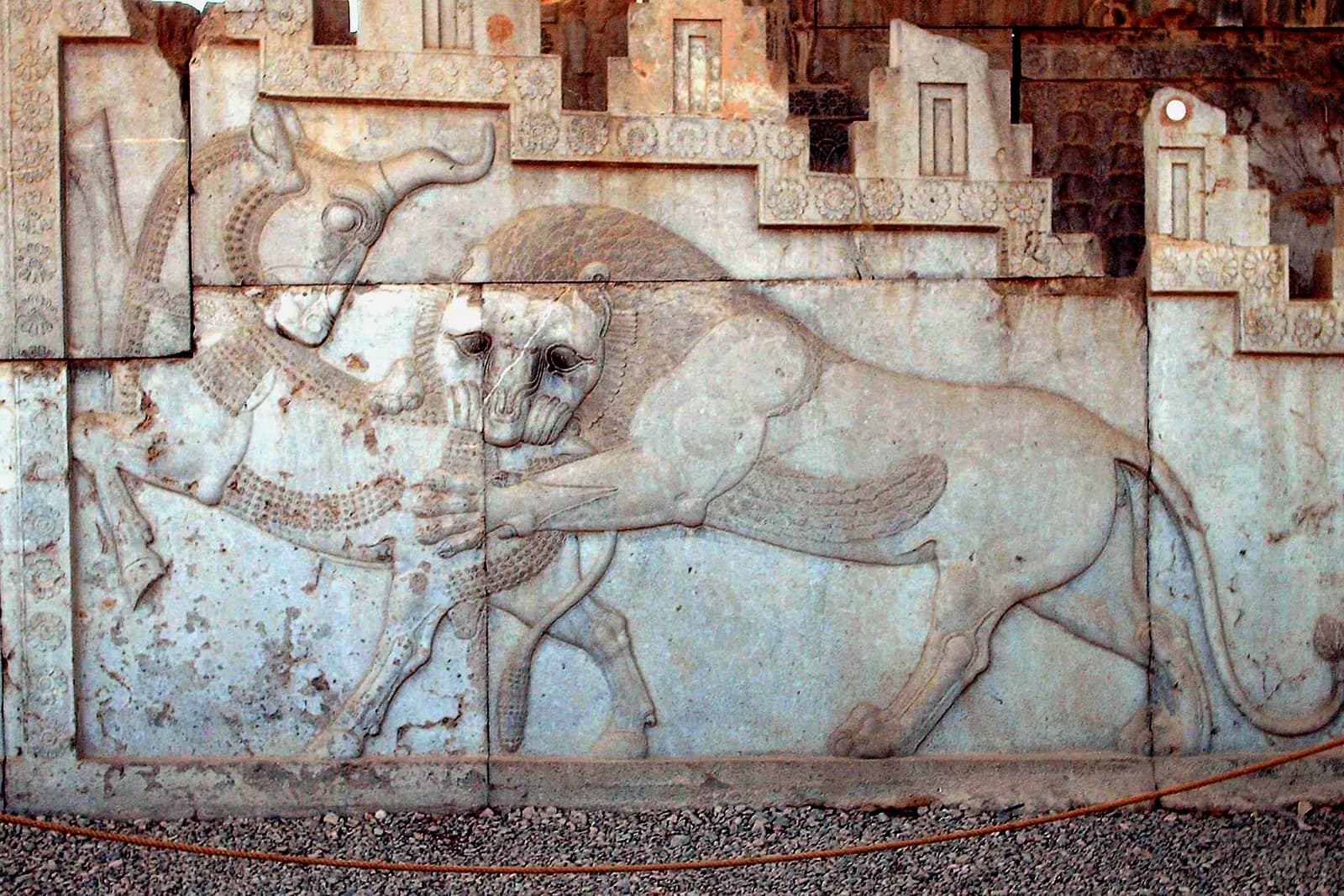
The Achaemenid palace is organised around vast columned halls, the apadana at Susa and Persepolis, designed for audience and display before assembled subjects rather than for administration. The reliefs on the approach staircases carry the message the building exists to deliver.
The Roman imperial palace developed on the Palatine from an aristocratic house into a complex of state rooms, and gave European languages the word palace. Its architecture is a long negotiation between the fiction that the emperor was a citizen and the fact that he was not.
What the evidence supports
The Mycenaean megaron plan is well attested by excavation.
Recovered at Pylos, Mycenae and Tiryns, with the throne position and central hearth consistent across sites.
Achaemenid palace architecture was designed for audience.
The scale of the columned halls and the processional approach reliefs both point to ceremonial function rather than administration, which was housed elsewhere and is documented in the tablets.
The Palatine complex accreted rather than being designed.
Successive emperors built and rebuilt; the excavated sequence shows overlapping phases rather than a single scheme.
Examples
The evidence level on each answers how we know what the building looked like, not whether it existed.
- Evidence level: Documented
Messenia · 13th century BCE
The palace at Pylos
The best-preserved Mycenaean palace plan, with the Linear B archive found in rooms beside the entrance. Excavated to a complete ground plan, with the archive rooms identified.
- Evidence level: Documented
Persepolis · Begun under Darius I
The Apadana at Persepolis
A columned audience hall on its own platform, approached by relief-lined staircases. Excavated, with column bases, staircases and reliefs surviving in place.
- Evidence level: Documented
Rome · Flavian, from 92 CE
The Domus Augustana
The imperial residence on the Palatine, combining state reception rooms with private apartments. Excavated on the Palatine, with substantial standing vaulted structures.
Primary sources
Mycenaean scribes, Linear B tablets from Pylos administrative archive
Records found in the palace itself, documenting what the building administered.
Darius I, Foundation charter of the palace at Susa DSf
Darius's account of the materials and craftsmen assembled to build a palace.
How to read the evidence labels
- Evidence level: Documented
- Supported by a named primary text or by excavated material evidence.
- Evidence level: Probable
- Supported by strong inference that most specialists accept.
- Evidence level: Disputed
- Substantial specialist disagreement exists; competing readings are stated.
- Evidence level: Literary
- Belongs to poetic or mythological construction rather than to history.
- Evidence level: Mythological
- Belongs to shared religious or mythic tradition rather than to any single text.
- Evidence level: Unknown
- The available evidence is insufficient to decide.
These labels describe the status of the evidence, not our confidence in a conclusion. A claim marked Literary is not a claim we doubt; it is a claim about what kind of thing a poem is.