This page is about Babylon as a civilization and a political order. For the city itself — the Ishtar Gate, Etemenanki, the excavations and the question of the Hanging Gardens — see Babylon, the ancient city.
How the city read itself
Babylon understood itself as the centre of the world — the seat of Marduk, the city whose name (Bāb-ilim, "gate of the god") declared its claim to be the point where the divine and human orders met. For the better part of two millennia it was the cultural and religious capital of Mesopotamia, surviving conquest after conquest because each conqueror found it more useful to rule through Babylon's prestige than to destroy it. The platform reads Babylon as the civilization in which two of the cluster's central acts first appear in monumental form: the grounding of royal authority in published law, and the legitimation of conquest as the restoration of a rightful order.
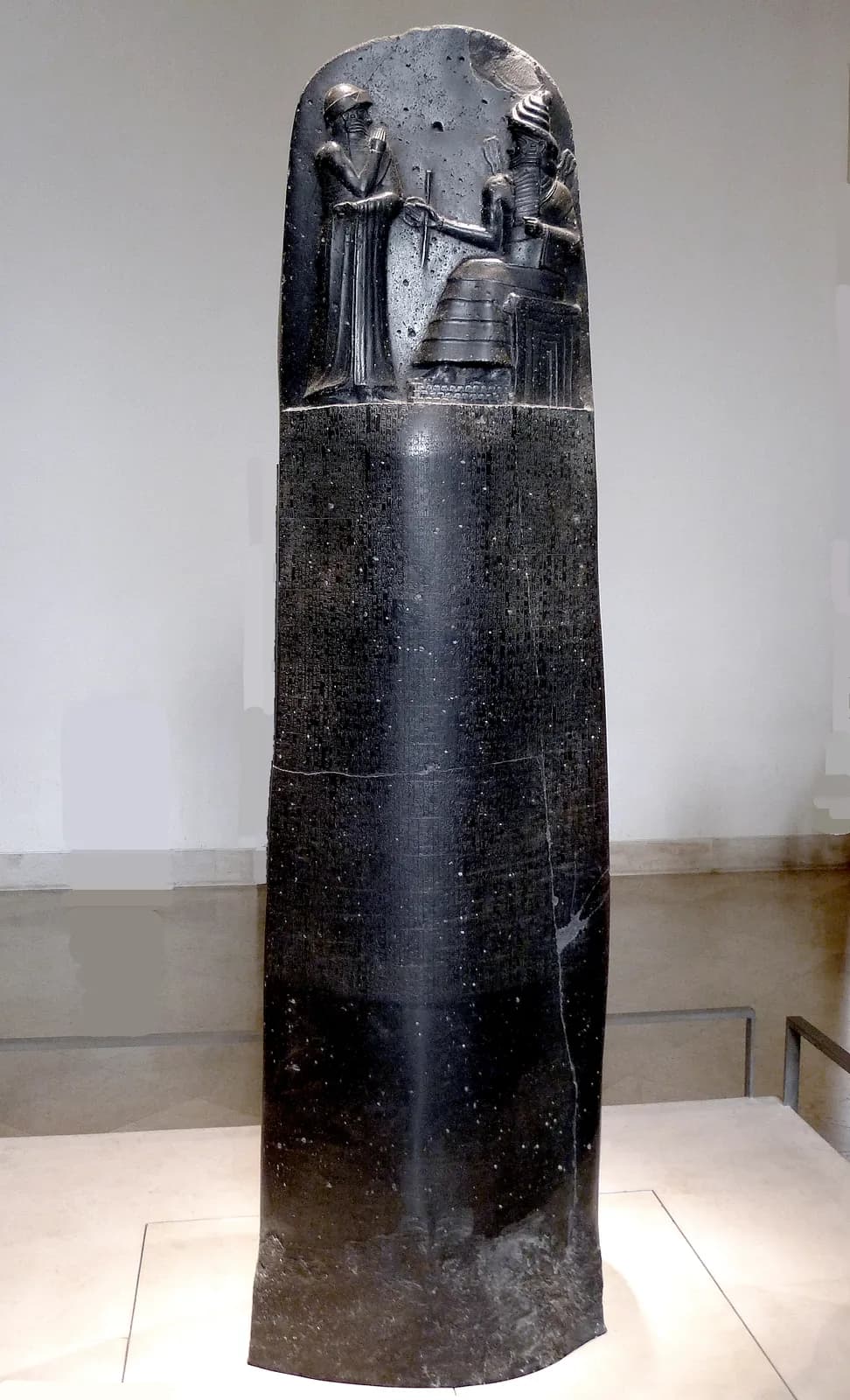
The king receives the law from the god of justice.
The Old Babylonian achievement: law made public
The first great Babylonian moment is the reign of Hammurabi (c. 1792–1750 BCE), who raised an unremarkable city-state to dominance over Mesopotamia and left the Code of Hammurabi — the fullest law monument of the ancient Near East. The platform reads the code not for the conquests, which dissolved soon after his death, but for the act it records: a king setting his justice in public, in writing, under the sanction of Shamash the god of justice, so that the strong should not oppress the weak and any wronged man could have the law of his case read out. This is the earliest sophisticated case in the corpus of political legitimacy grounded in codification rather than in force alone.
The Neo-Babylonian splendour
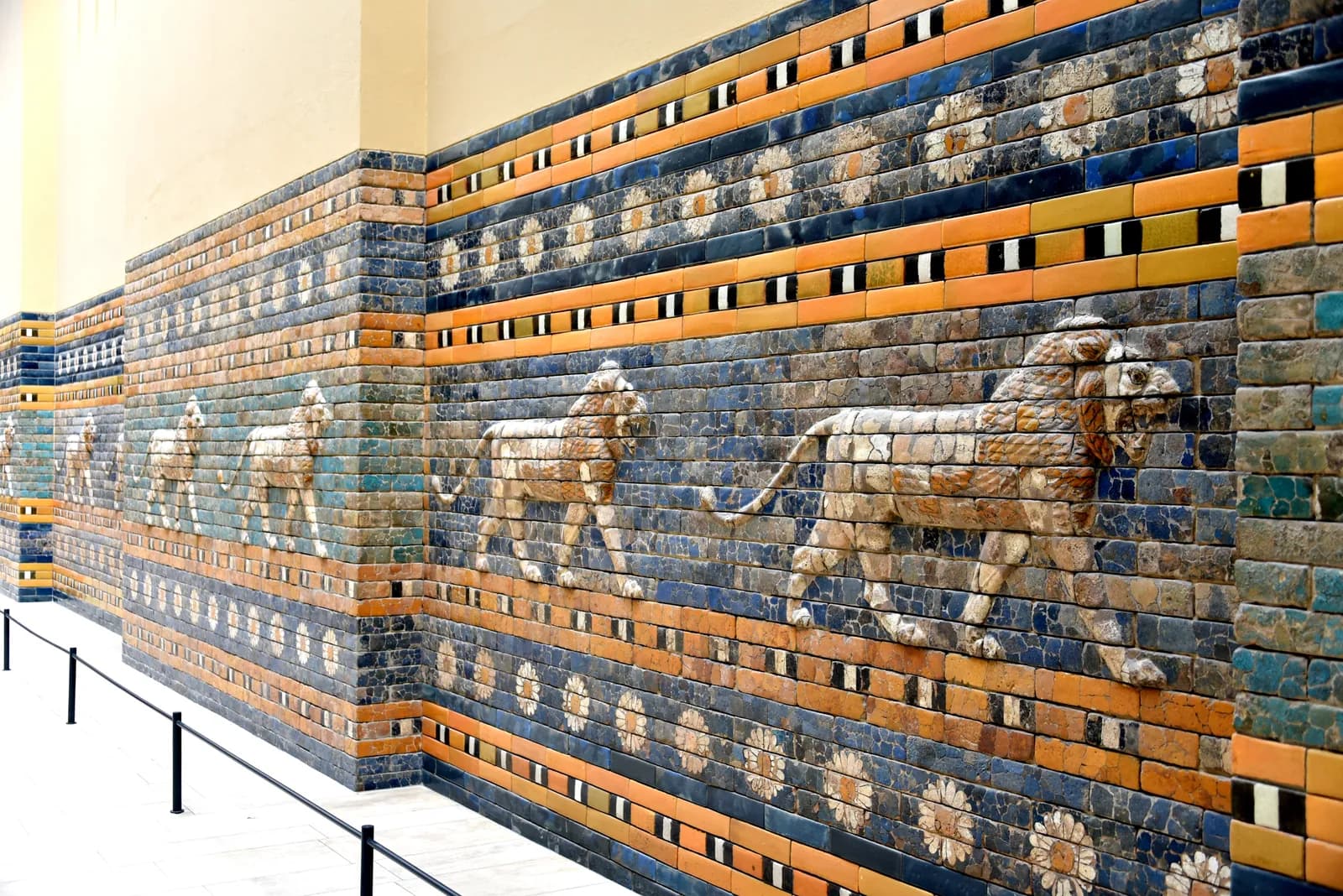
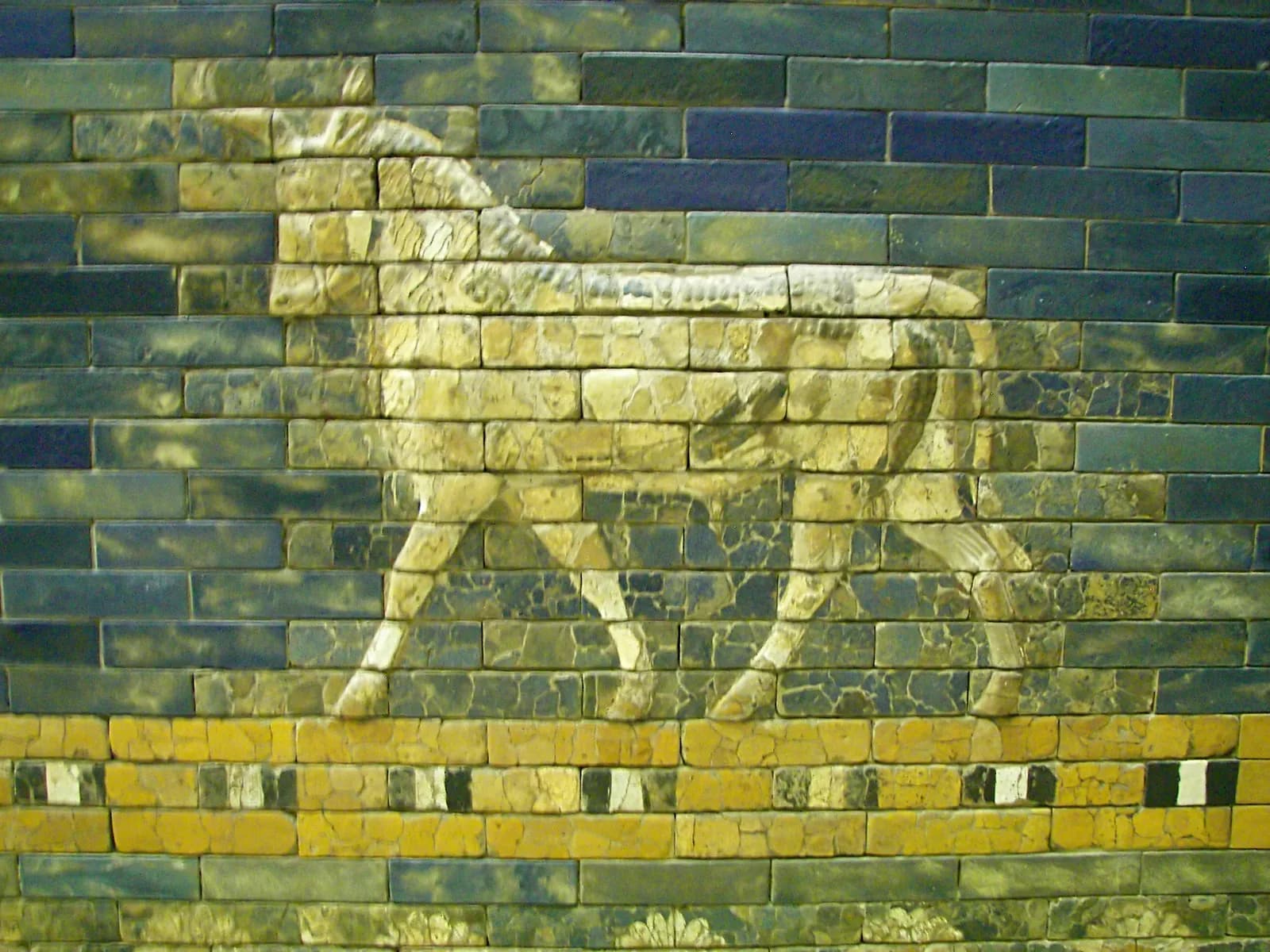
The second great moment is the Neo-Babylonian empire of the seventh and sixth centuries BCE, above all the long reign of Nebuchadnezzar II, who rebuilt Babylon into the most magnificent city of its age — the great walls, the ziggurat the Hebrew tradition remembered as Babel, the hanging gardens of later legend, and the lapis-blue Ishtar Gate with its Processional Way ranked with striding lions. The platform reads this monumental program as a statement in brick of the same claim the law-code made in stone: that the king's authority is the visible guarantee of a cosmic order centred on the city and its god.
The fall — and the model it gave
In 539 BCE Babylon fell to Cyrus the Great, and the manner of its fall became one of the founding episodes of the cluster. Rather than sack the city, Cyrus entered it as the restorer of Marduk's neglected cult, and recorded on the Cyrus Cylinder — itself a Babylonian-genre foundation text — his claim to rule by restoration rather than conquest. The platform reads this as the hinge on which Babylon passes into the Persian story: the city that had taught the ancient world to ground kingship in law now taught it how a multi-ethnic empire could ground legitimacy in accommodation. Babylon's prestige outlived its independence; it remained a great city under Persian, then Macedonian rule, and Alexander died within its walls.
Why the platform reads Babylon
The platform reads Babylon because it is where the founders-and-lawgivers cluster begins — chronologically and conceptually. Long before Greek democracy or Roman law, a Babylonian king had already discovered that durable authority is cheaper and stronger when it is grounded in public, written justice than in terror; and a Persian conqueror had already discovered that an empire is more durably held by restoring the orders of the conquered than by erasing them. Both discoveries are read at length in law before democracy and the long history of political legitimacy.