The state remade to survive
The Late Empire is a different Roman state from the one that preceded it — not the gentle decline of the Principate but a deliberate reconstruction, forced into being by the near-collapse of the third century and built to withstand the pressures that had almost destroyed Rome. The platform reads the Late Empire as the empire's second founding: the abandonment of the Augustan fiction, the open avowal of autocracy, the doubling of the army and the bureaucracy, the turn to a Christian church and an eastern capital. It is the form in which Rome survived — in the west for nearly two more centuries, in the east for a thousand.
The crucible: the third-century crisis
The Late Empire was born out of the crisis of the third century — the fifty years (c. 235–284) of barracks emperors, civil war, invasion, plague, currency collapse and territorial fragmentation in which the classical Principate was destroyed. Aurelian's reconquest of the breakaway Gallic and Palmyrene states showed that recovery was possible by force of arms; Diocletian's accession in 284 made the recovery structural. The state that emerged had learned the crisis's lessons — that the army made emperors, that the succession had no rule, that one man could not hold the whole — and built institutions around each.
Constitutional and political structure: the Dominate
Diocletian abandoned the pretence that had defined the Principate. The emperor was no longer princeps, first among citizens, but dominus — lord — approached through an elaborate court ceremonial of prostration and sacred distance. The platform reads this as the honest form of what the Principate had concealed: an autocracy that no longer needed Republican costume. His Tetrarchy — two senior Augusti and two junior Caesares, dividing the office across the empire's fronts and building the succession into the structure — was the boldest constitutional engineering the empire attempted, and its collapse into civil war within a year of his abdication is the sharpest case the platform reads under imperial succession. Constantine restored personal, dynastic rule on the foundation Diocletian had built.
Military and administrative structure
The Late Empire ran on a vastly enlarged army and bureaucracy. Diocletian roughly doubled the provinces, grouped them into dioceses, separated civil from military command everywhere so that no official held both troops and taxes, and reformed taxation onto a regular assessment to fund it all. Under army and state and imperial administration this is the mature, heavy, intrusive late-Roman state — strong enough to hold the empire together, expensive enough to strain it permanently. The Strategikon, two centuries later, shows the end point of the military evolution: the salaried, drilled, centrally administered East Roman army that the ancient legion had become.
Civic ideals, religion and the Christian turn
The Late Empire's most consequential transformation was religious. Diocletian's sacralised autocracy made the Christians' refusal of the imperial cult intolerable, and his reign ended in the Great Persecution of 303 — the last and most systematic Roman attempt to destroy the church. Constantine inverted the policy completely: toleration, then active patronage, then in 325 the Council of Nicaea, which he summoned and presided over. The platform reads this under state and religion as continuity inside apparent rupture — the emperor as guarantor of the public religion, the office Augustus had built, now Christian. Constantine's refoundation of Byzantium as Constantinople in 330 moved the empire's center of gravity east, to the city that would carry the Roman name until 1453.
The great tension
The Late Empire's tension is the cost of its own survival. The reforms that saved the state made it less free, more intrusive and more expensive — a militarised autocracy pressing heavily on the population it protected. Whether this counts as the salvation of Rome or the end of everything worth saving in it is the oldest argument in the historiography of decline, and the platform leaves it open. What is not in doubt is that the Late Empire bought centuries of continued life — and that the western half of it nonetheless came apart in the fifth century under the weight of invasion and its own fiscal and military strains.
Relationship to the earlier phases
The Late Empire is the answer to what the High Empire could not survive: the collapse of the adoptive succession and the third-century catastrophe. It keeps the administrative machinery the Principate began and the High Empire matured, but discards the constitutional fiction that had bound them since Augustus. It reads, in the platform's arc, as the last Roman phase — the bridge from the ancient world into the Byzantine and medieval orders that grew out of it.
Visual archive
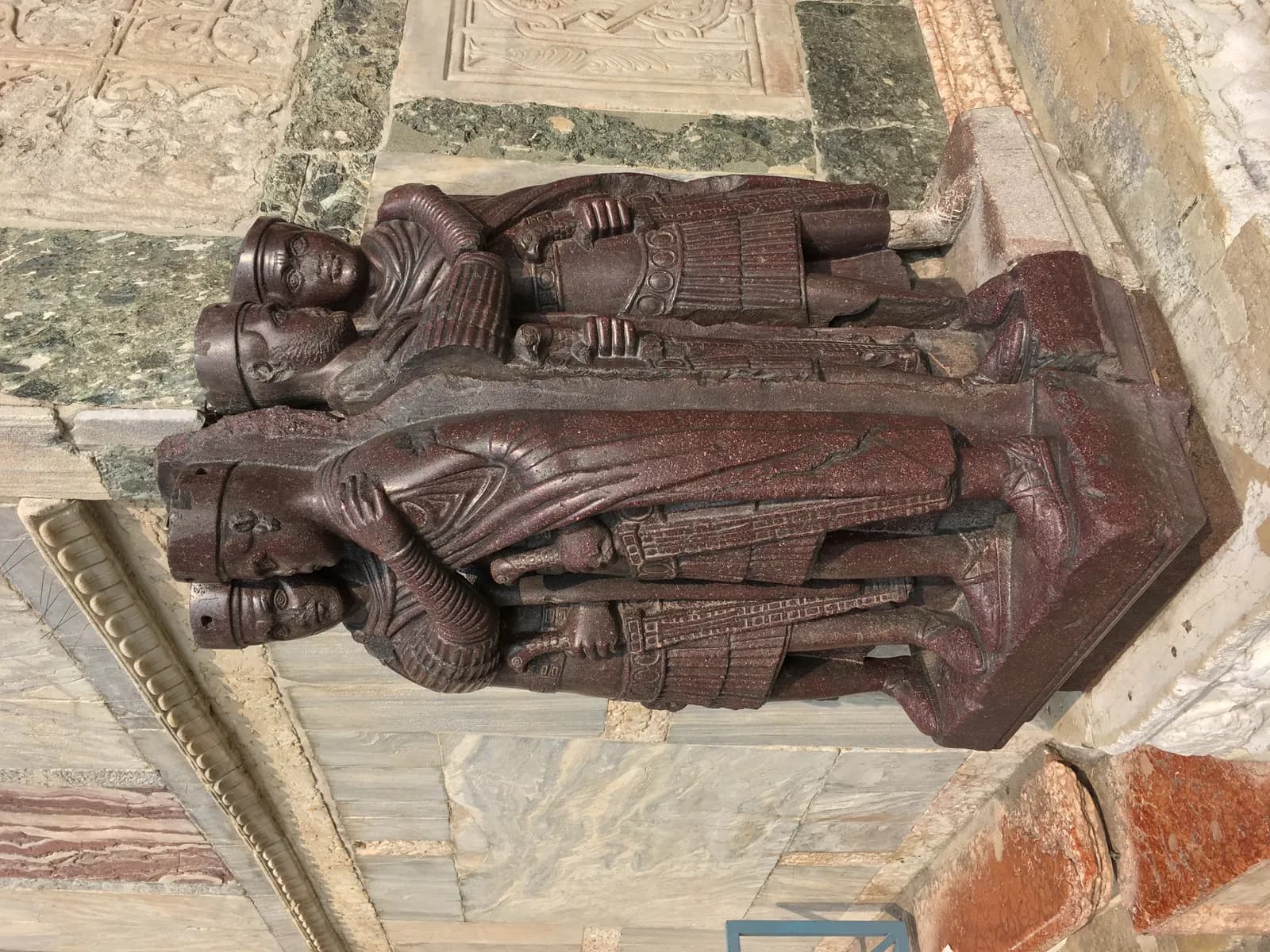
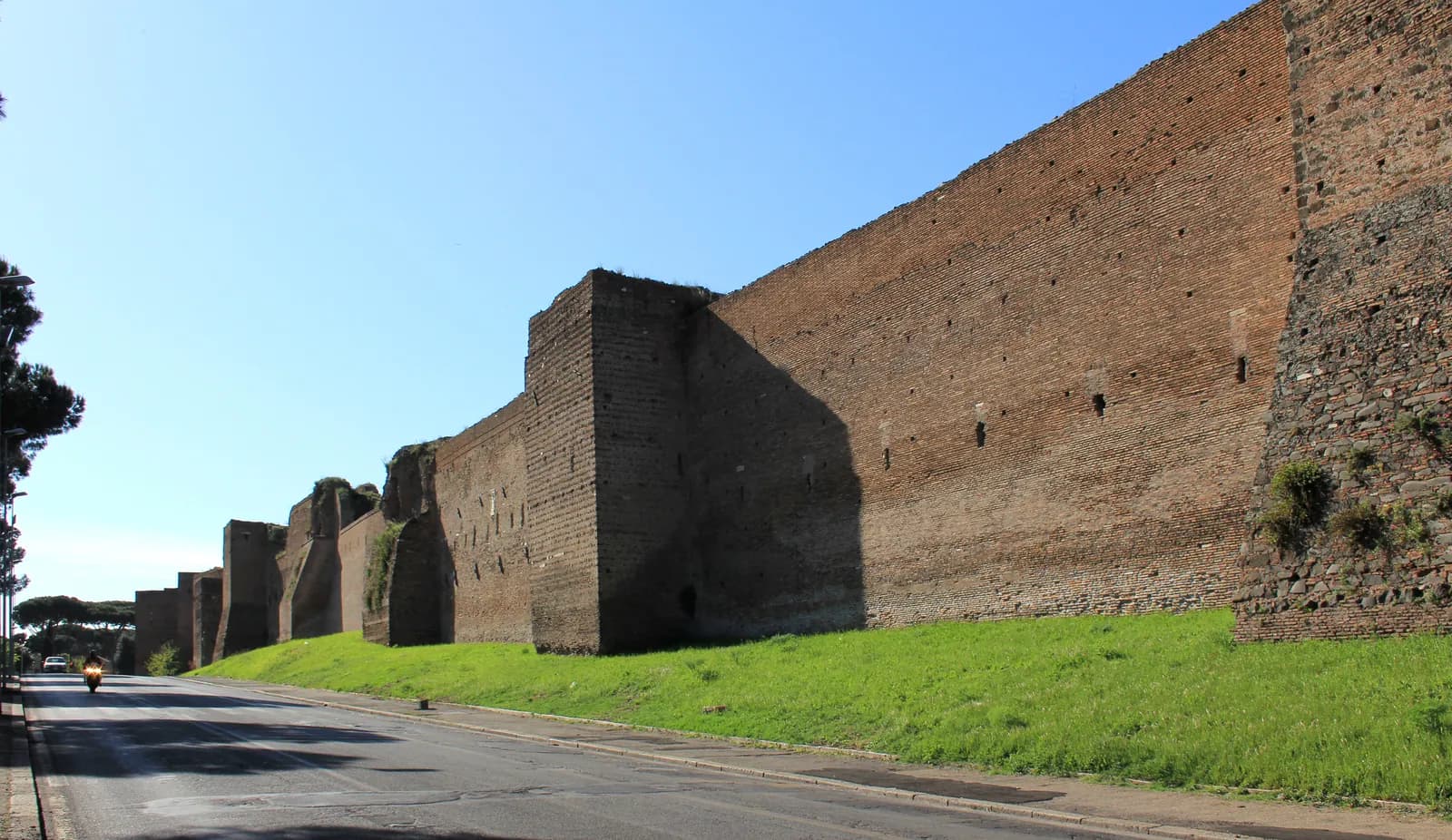
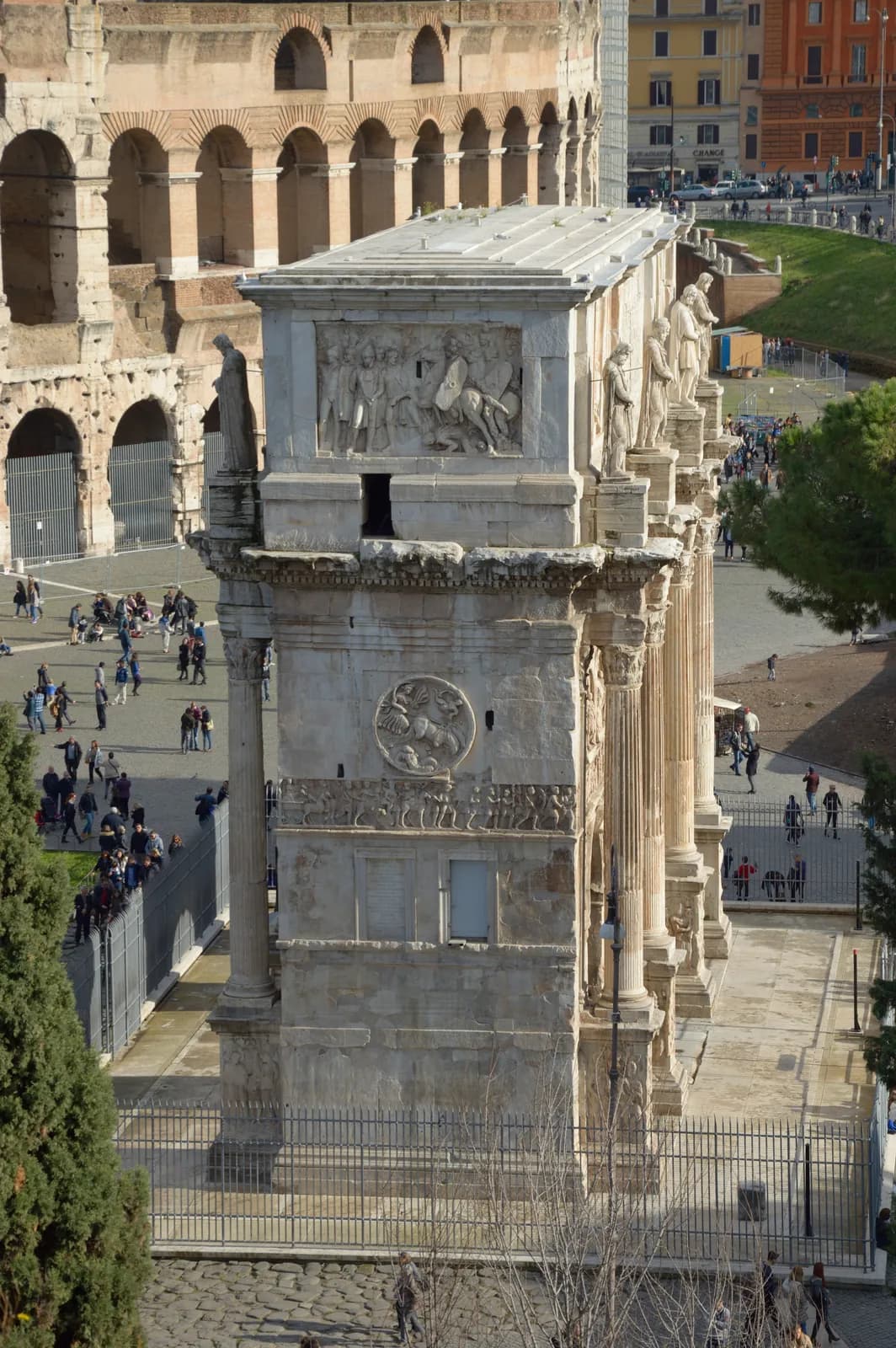
The Late Empire's monuments record its character. The Arch of Constantine, assembled partly from spolia of earlier emperors, stands as the visual statement of the new order claiming the prestige of the old; the porphyry group of the Tetrarchs (now at Venice) shows the four co-emperors as identical, abstract, interchangeable figures of office rather than individuals — the Dominate's image of itself; and the Aurelian Walls record the moment Rome itself needed defending. These anchor the visual archive across the figure and essay pages grouped here.
Why the platform reads the Late Empire
The platform reads the Late Empire because it is the clearest ancient case of a great state deliberately reinventing itself to survive — and of what such survival costs. It is also the hinge on which antiquity turns into the medieval world: the Christian empire, the eastern capital, the alliance of throne and altar, and the late-Roman law and administration were the terms on which Europe and Byzantium would build for the next thousand years. The Roman arc the platform traces — Republic, Principate, High Empire, Late Empire — ends here, not in a fall but in a transformation.